
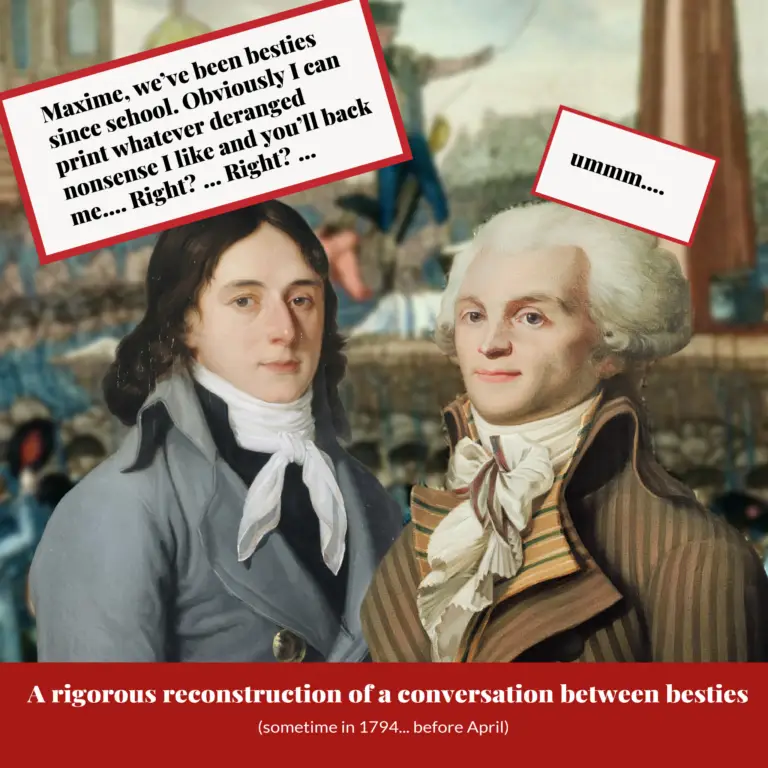



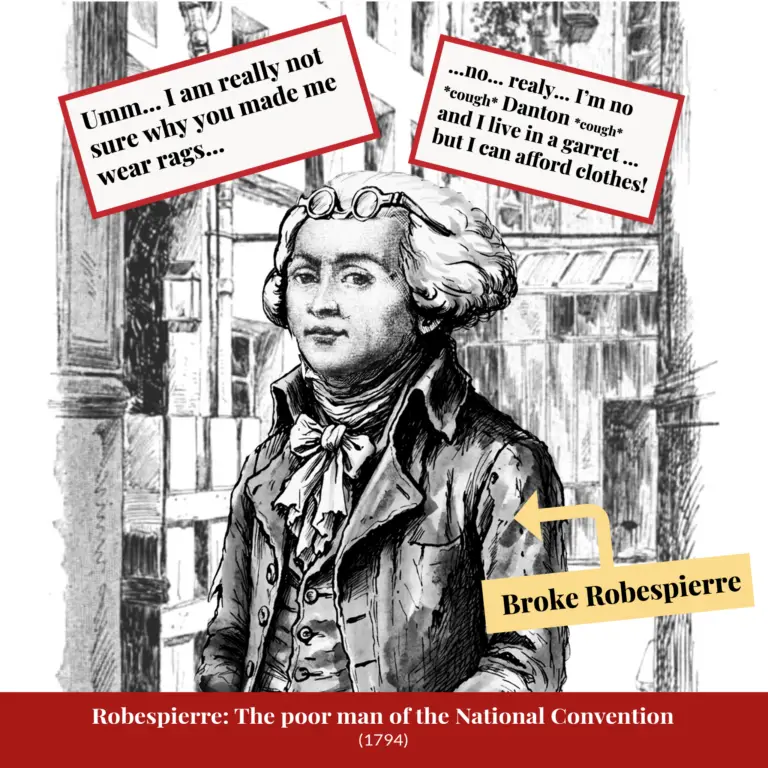
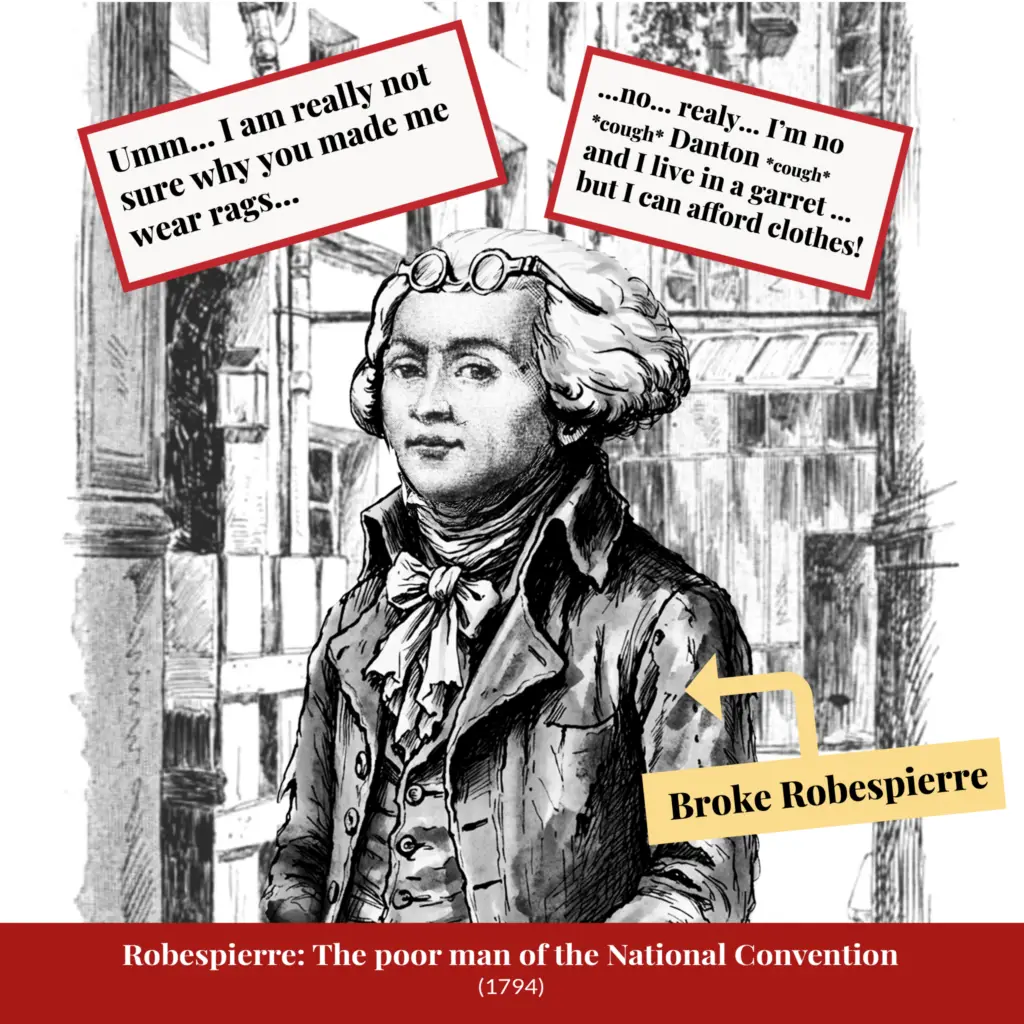
If you go looking for Robespierre’s estate, do not bother. There is none. No charming farmhouse lined with fruit trees he tended in his leisure. No grand chateau full of childhood secrets. Not even a charming Artesian address where a procession of distinguished tutors might have shaped the future Incorruptible.
What you get, at best, is a rented townhouse in Arras, which he shared for a time with his sister. That was the sum total: a place he did not own, with hardly anything inside. Thirty-six years, and this is what he left behind.
Why? Because, as Albert Mathiez put it with his characteristic rhetorical flourish in a speech about him, Robespierre died “penniless, leaving only the value of 800 livres in assignats as his inheritance.” The number, if you are curious, translates to roughly 8,264.90 euros in 2026 currency. You might say, well, that is not so bad…considering the state of the world economy, a bank balance of 8,000 euros might sound almost respectable.
But context matters. This is all that remained after a life spent as a lawyer, a deputy, and, for a short while, one of the most recognisable faces in revolutionary France.
Put it this way: name any current head of state. Look up their declared assets. Unless they’ve taken a vow of poverty … they’ve likely cleared 8,000 euros. Many times over.
So is this true? Did the Incorruptible really lead a life of financial hardship? Let’s see what the records say.
The Socio-Economic Context of the Robespierre Family
The Robespierre family came from Vaudricourt in Artois, where they can be traced back to the fifteenth century. They formed a line of gens de loi, legal professionals who held offices such as usher (huissier) at the Council of Artois 1 and royal auditor (procureur) in Béthune. In the eighteenth century, three lawyers named Robespierre followed one another, from father to son, at the bar of the Council of Artois.
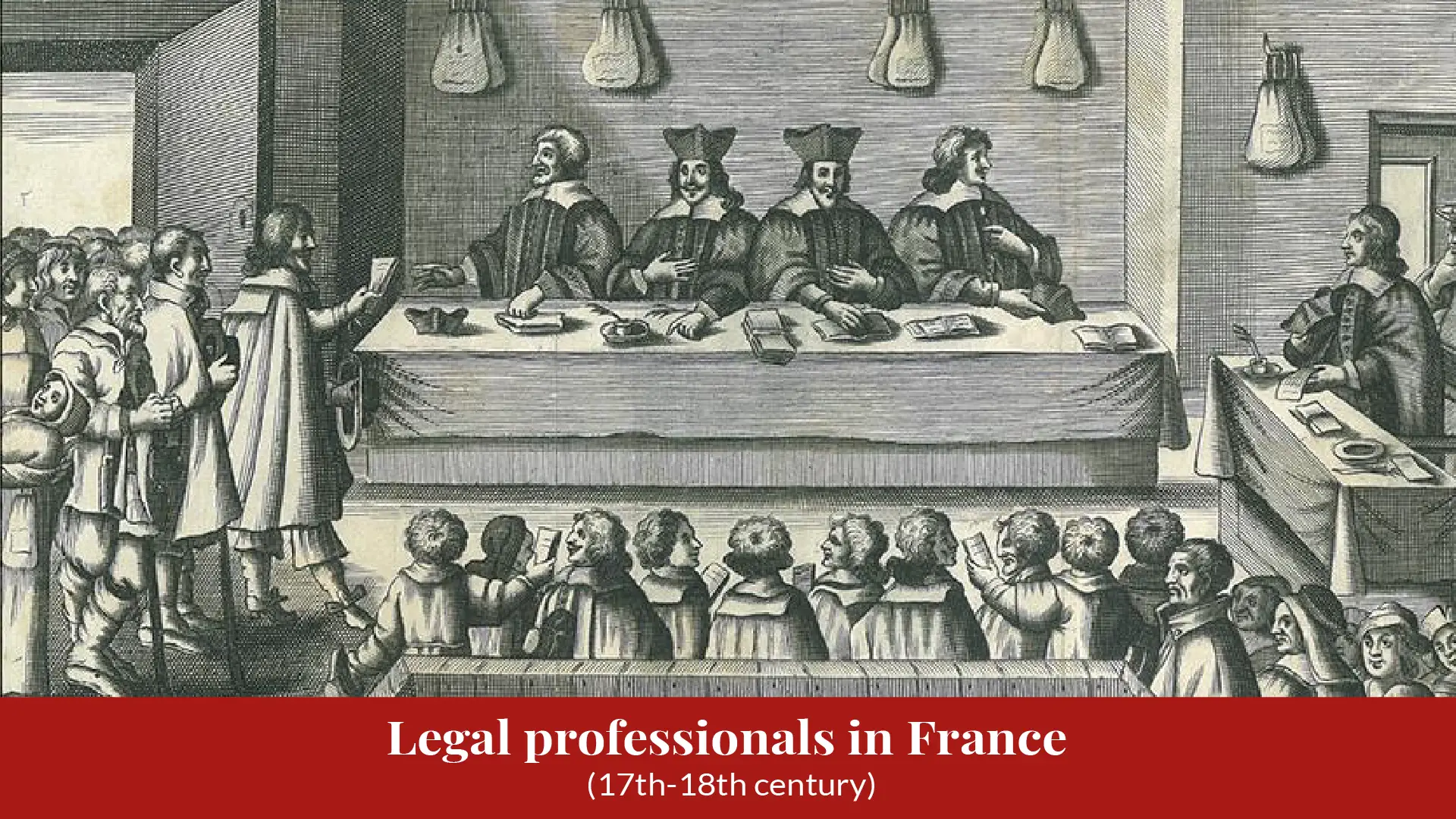
This background placed them in the petite bourgeoisie, the lower-middle professional class of the Ancien Régime 2, where status usually depended more on education and office than on land.
Robespierre’s paternal grandfather, also called Maximilien (1694–1762), was a lawyer at the Council of Artois. Despite a long career, he did not greatly enlarge the family fortune and could give his children only modest dowries. When Robespierre’s grandmother, Marie-Marguerite (née Poiteau), died, her four children shared an inheritance of just over eight thousand livres (about 91 000 euros in 2025).
In short, Robespierre’s father did not start life with much from his parents. Spoiler alert, it will not get better.
An orphan with an absent father
Our Maximilien Robespierre was born from the union of Maximilien Barthélemy François de Robespierre (1732–1777) (henceforth François, because there are already too many Maximiliens) and Jacqueline Marguerite Carraut (1735–1764). We have seen that while François de Robespierre did not receive a financial windfall from his parents, he did inherit a profession: the law. At the start of his career, he made reasonable use of it.
Like his father, as an advocate at the Council of Artois in Arras, François de Robespierre was a capable professional, recognised for his talents. In his early years he was active and in demand, regularly involved in court cases.
After his wife’s death in 1764, however, his situation declined sharply. He stopped pleading and withdrew from business. His work became irregular after a short appointment as grand bailiff in Oisy in 1765. By March 1766 he was in financial difficulty, borrowing money from his sister Henriette and taking an advance on his share of his mother’s future estate.
He then renounced his share of his mother Marguerite Poiteau’s inheritance in 1770, in favour of his sisters, acknowledging that he had already received more than his due. This renunciation was confirmed from Mannheim, where he had taken up residence. Although he remained nominally entitled to a portion of his mother’s estate, court judgments in 1780 compelled him to repay a loan contracted before his departure from Arras in 1766.
François’s four children were then scattered among relatives. Maximilien and his younger brother Augustin went to live with their maternal grandparents, the Carrauts, while his sisters, Charlotte and Henriette, were taken in by their paternal aunts.
The father returned to Arras occasionally to plead in 1771 and 1772, then vanished for good from his children’s lives. He is believed to have worked as a language master and died in Munich on 6 November 1777. He left his four children nothing.
Bursary at Louis le Grand (1769-1781)
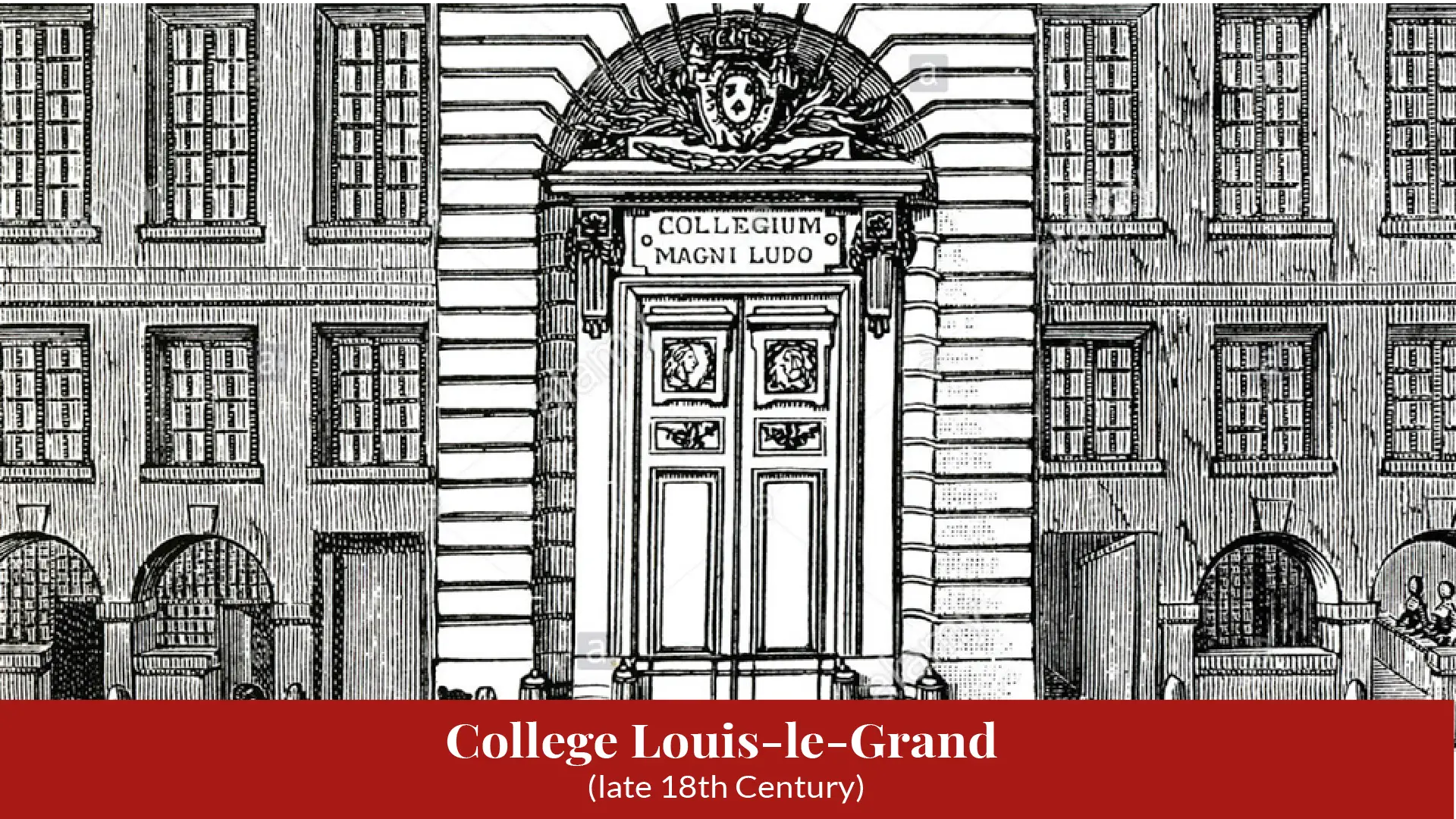
Maximillien Robespierre’s education was only possible thanks to a scholarship to the Collège Louis-le-Grand 3 in Paris. He obtained this bursary in 1769, at the age of eleven, on the recommendation of the Bishop of Arras, Louis-Hilaire de Conzié 4. The scholarship was one of eight attached to the “Collège d’Arras” 5.
The award covered both his studies and his board. It was worth 400 livres (≈ 4 510 euros) per year until the start of the 1779 academic year, when it rose to 450 livres (≈ 5 074 euros) per year.
Beyond basic tuition and lodging, the Collège Louis-le-Grand, via the “collège d’Arras” foundation, also helped its bursars with academic expenses and rewards. Robespierre drew on this support at several points. The college paid the printing costs of his philosophy theses in 1777 (two payments of 12 livres (135 euros) each), the fees for his maîtrise ès arts (40 livres (451,06 euros)), and the costs linked to his university law degrees: his baccalauréat en droit (60 livres (676,59 euros)), his licence en droit (60 livres (676,59 euros)), and the final French law examination required for admission to the bar (60 livres (676,59 euros)).
In cases of particular need, the college could also grant exceptional aid. Robespierre received 60 livres (676,59 euros) in early August 1778 expressly to meet his day to day needs. No other bursar of the collège d’Arras received such a payment during his studies. It may have followed the death of his maternal grandfather, Jacques Carraut, in March that year, which likely interrupted whatever modest family support he had been getting.
His consistently strong results also brought direct financial rewards. In May 1781, he was awarded 96 livres (1 082,55 euros) by the Collège Louis-le-Grand for taking first place in the public examination of law students. When he completed his studies in July 1781, he received a further gratification of 600 livres (6 765,93 euros). The college administration granted this sum in recognition of his “eminent talents”, his “good conduct during twelve annes”, and his steady “successes in the course of his classes, both at the university prize distributions and in the philosophy and law examinations”.
The Carraut Inheritance and Initial Capital
A key turning point in the Robespierre children’s early finances came with the death of their maternal grandfather, Jacques Carraut, a brewer in Arras, on 14 March 1778. The inventory of his estate, drawn up between 31 March and 3 April 1778, listed total assets of about 32,000 livres (≈ 360 849 euros). These included the house and brewery on rue Ronville (valued at 22,200 livres (≈ 248 084 euros)), various sums owed to Carraut, furniture, cash, and commercial profits from the brewery. The estate also carried heavy debts of around 24,138 livres (≈ 272 193 euros), consisting of dowries previously given to his children and several loans.
After these debts were settled, and once Augustin Carraut (Maximilien’s maternal uncle) had taken over the house and brewery along with a large share of the remaining liabilities, a net amount remained for the other heirs. According to the deed of partition dated 3 November 1780, Maximilien Robespierre’s portion of the inheritance came to 1,025 livres. With accrued interest, this rose to 1,142 livres (≈ 12 877 euros) by the time he received it. His sister Charlotte received a similar sum.
This inheritance from Jacques Carraut, together with the 600-livre gratification (≈ 6 765 euros) that Maximilien received from the Collège Louis-le-Grand at the end of his studies in 1781, and 152 livres (≈ 1 714 euros) left from their deceased sister Henriette’s estate, formed a shared capital for Maximilien and Charlotte. In total, this amounted to about 3,000 livres (≈ 33 829,66 euros) around 1781.
If placed at the “ordinary investment rates of that era” (around 4.5%), this modest capital could yield roughly 135 livres (≈ 1 522,33 euros) a year. It was clearly not enough to support both of them. It did, however, provide a small financial cushion, enough to set up a modest household when Maximilien returned to Arras and to offer a slight supplement while his legal practice began to bring in income.
Young Lawyer in Arras (1781-1789)
Robespierre set up his legal practice in Arras, a town with a relatively small bar of just over eighty lawyers. He also, quite famously, did not choose to enrich himself, preferring cases that interested him and served a higher notion of justice. In other words, he often put principle ahead of profit. If we follow his sister Charlotte, he sometimes went further than waiving fees for poorer clients and even helped them out of his own pocket:
He favoured defending the poor and would often offer them his purse rather than ask for a fee 6
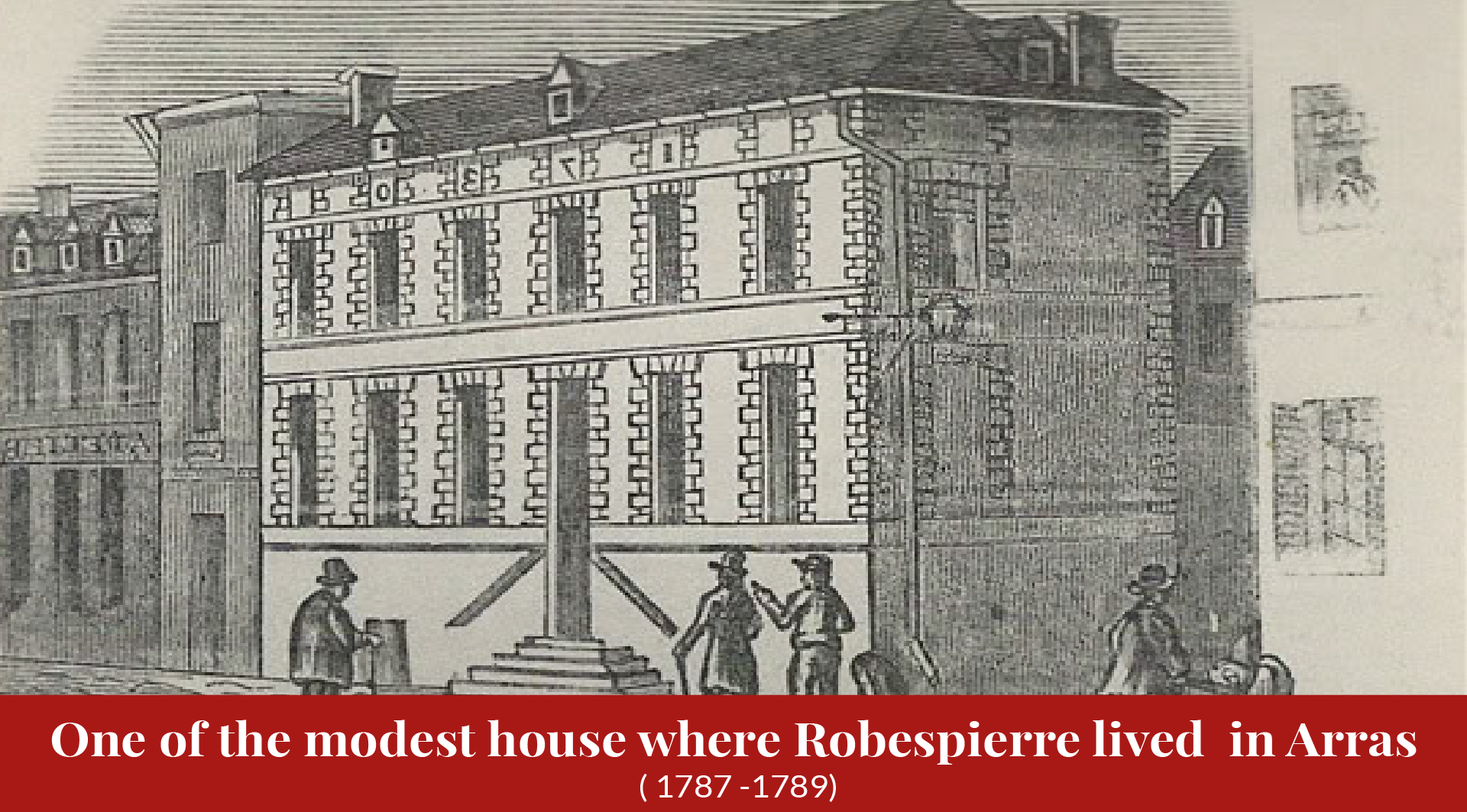
Even so, he must have had some income. Otherwise he could hardly have afforded to keep house with his sister. On his return to Arras, Maximilien and Charlotte lived together in a small rented house on rue du Saumon. Charlotte ran the household, and they even employed a servant. It was a modest setup, but it kept the appearance of bourgeois respectability expected of a young lawyer with ambitions.
The earnings of legal professionals in the late eighteenth century varied widely. A well-known lawyer might bring in around 10 livres (104 euros) per day, while a beginner could expect about 1,500 livres a year, roughly 4 livres (41 euros) per day. If we place Robespierre somewhere between these two, he would have lived on about 7 livres (72 euros) per day, or around 2,555 livres (26,501 euros) a year. Not a large amount for two adults running a household.
Deputy at Versailles/in Paris (1789-1792/93)
In 1789, Maximilien Robespierre was elected deputy to the Estates-General, which had the practical effect of raising his income. As a representative, he received a parliamentary indemnity of 18 livres (roughly 187 euros) per day. Deputies were also reimbursed for travel to and from Versailles, later Paris, at 5 livres (51 euros) per post. Payments began on 25 April 1789 for those present at the official opening, or from the day they actually turned up.
In short, this was a noticeable increase compared with his earnings as a small-town lawyer in Arras, though hardly the road to luxury. Including travel expenses, he would have made about 5,060 livres (52,350 euros) a year.
His own habits remained plain. Between October 1789 and August 1791, he rented two rooms in the Marais, which Charlotte later described as a very modest flat shared with a colleague.
Out of this salary, Robespierre supported not only himself but also his younger siblings, Charlotte and Augustin. Their situation in Arras was regularly unstable and they depended on him. He often sent them up to a third of his income.
He also paid for the occasional political expense, for instance the printing of his 1790 “Adresse au peuple belgique”. The result was predictable: very little left for indulgence.
It is therefore not surprising that he defended parliamentary indemnity with such persistence. He did not treat it as a personal windfall (one would struggle to enrich oneself on 50,000 euros a year even now) but as a practical safeguard that allowed people of modest means to sit in the legislature without sinking into debt. He saw it as a defence against a parliament dominated by the well-off, and as a condition for representatives who wished to stay independent and focused on the public good.
Financial Situation During the Legislative Assembly and National Convention
Following the dissolution of the National Constituent Assembly 7 in September 1791, Robespierre, as a result of his own successful motion on the non-re-eligibility of its members, was excluded from the new Legislative Assembly. This meant an abrupt end to his parliamentary income. It bears repeating: a man who already had very little to live on, and who stood to lose part of his earnings by going back to life as a provincial lawyer, voted to bar himself from power.
Even so, his political profile and legal competence kept him in public life and brought in another source of income. He was appointed Public Prosecutor for Paris, a post of some importance. In this role, he received an indemnity of 8,000 livres per year (83 087,51 euros). He resigned after a few months, wanting to concentrate on politics and to launch a journal, the Defender of the Constitution. A bold move, given that he had no replacement income lined up.
This is not an isolated case. Robespierre consistently, and with some persistence, chose principle over profit, and at times, as here, over basic subsistence.
As a member of the National Convention (elected in September 1792), he again received a parliamentary indemnity, still set at 18 livres per day.
Lodgings at the Duplay Family
Robespierre lived with the Duplay family at 366, rue Saint-Honoré, from 17 July 1791 until his death in July 1794.
He moved into the Duplay house around August 1791, after the events of the Champ-de-Mars 8. Maurice Duplay, a carpenter, invited him to stay as a boarder, and Robespierre accepted. According to Charlotte, whose judgement here is doubtful since she disliked the Duplays, he agreed mainly because he did not like refusing people. In other words, he was too shy to say no.
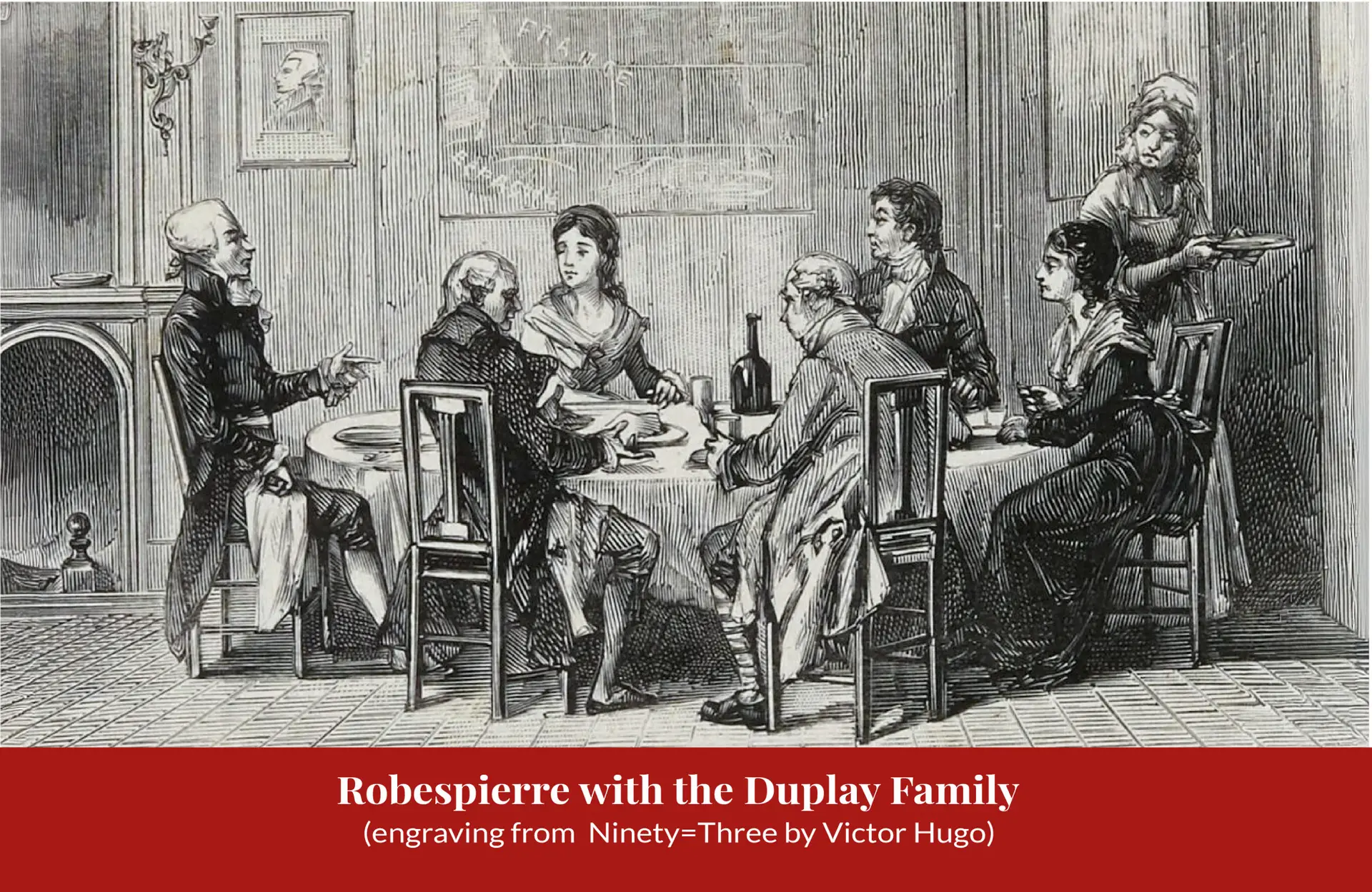
At first, there is little written evidence about the exact terms of the arrangement. From 1 October 1793, however, Maximilien and his brother Augustin are recorded as renting two apartments from Maurice Duplay. The annual rent from that date was 1,000 livres (10 385,94 euros), and the agreement was made without a formal written lease.
Robespierre’s room was plain: a walnut bed, blue damask curtains with white flowers (cut from one of Mme Duplay’s dresses), a small desk, straw chairs, and a bookshelf. In the Duplay household he found something close to a family setting. Mme Duplay and her daughters looked after him with what contemporaries called the liveliest interest and the most delicate care. The parents treated him as a son, the children as a brother.
Robespierre’s Finances at the moment of his death
The exact state of Robespierre’s finances at his death on 10 Thermidor Year II (28 July 1794) is reported with some minor variations, but all accounts agree on one point: he had very little.
His sister Charlotte, in her memoirs, claimed that Maximilien “died poor, and had only 50 francs at home when he was dragged to the scaffold”. Fifty francs (equivalent to 50 livres at the time, since the franc was introduced as a decimalised livre) is a negligible amount, essentially pocket money (around 516,56 euros).
The clearest and best documented figure comes from after his execution. In Pluviôse an IV (January–February 1796), the Thermidorian authorities assessed his estate. This valuation, identified by Albert Mathiez in official property records, put his total fortune at 1,617 livres and 80 sols (16 746,76 euros). This sum was explicitly described as the proceeds from the sale of his “modest furniture” and other belongings such as books and clothes.
In short, unlike many of his contemporaries (and many of ours), Robespierre showed no interest in personal enrichment. His enemies, especially just after Thermidor, tried to invent tales of hidden wealth or royalist designs in order to discredit him. These accusations of financial misconduct did not last long, for the simple reason that the available evidence pointed in the other direction: a consistently modest, even frugal, way of life. His financial record became, and remains, a significant element in how historians read the career and the posthumous legend of “the Incorruptible”.
Footnotes
- 1The Council of Artois (Conseil provincial d’Artois) was the superior court for the province of Artois, created in 1530 by Charles V and maintained, with some adjustments, after the province passed under French control in the seventeenth century. It sat at Arras and functioned as a hybrid body, somewhere between a présidial and a parlement: sovereign in criminal, fiscal and noble matters, but subject to appeal to higher courts (first the Grand Council of Malines, then the Parlement of Paris) in many civil cases.
- 2Ancien Régime a convenient label, coined after the fact, for the political and social order of the French kingdom before 1789.
- 3The Collège Louis-le-Grand in Paris began life in the sixteenth century as the Jesuit Collège de Clermont, founded with the support of Bishop Guillaume Duprat to train clergy and lay elites. It developed into a major teaching institution of the Paris University, attracting pupils from the high nobility down to gifted scholarship boys from the provinces. After the expulsion of the Jesuits in the 1760s, the college was taken over by the University and the Parlement of Paris, rebranded as the Collège royal Louis-le-Grand, and turned into a sort of flagship institution: several of the small provincial colleges in Paris, including the Collège d’Arras, had their endowments and bursaries folded into it.
- 4Louis-François-Marc-Hilaire de Conzié (1732–1804) was a French prelate who became bishop of Saint-Omer in 1766 and bishop of Arras in 1769, the last holder of that see under the Ancien Régime.As bishop of Arras he was, by right, president of the clergy in the provincial Estates of Artois and a figure of some local weight.
Later hagiography presents him as a protector of Robespierre, intervening to secure. During the Revolution he refused to sit as a deputy of the clergy, followed the comte d’Artois into emigration, and ended his career as a travelling counter-revolutionary churchman, dying in London. - 5The Collège d’Arras was a medieval Paris college, founded in the early fourteenth century by the abbey of Saint-Vaast at Arras to house poor students from its diocese who came to study at the University of Paris. It formed part of the dense landscape of “petits collèges”, endowed houses that provided lodging and small stipends rather than full teaching programmes. By the eighteenth century the Collège d’Arras had left few archives and little architectural trace; what remained was mainly its income and bursary scheme, which the Parlement of Paris attached to the Collège Louis-le-Grand when it rationalised the system after the expulsion of the Jesuits
- 6The actual quote: Il se chargeait de préférence de la défense du pauvre, et, souvent lui offrait sa bourse au lieu d’exiger des honoraires.
- 7Between 1789 and 1795, France had 3 different types of elected governments:
- Constituent Assembly (1789–1791): Write the first constitution and dismantle the Ancien Régime and help France transition from absolute monarchy to constitutional monarchy.Deputies of the Estates-General turning themselves into representatives of “the nation”.
- Legislative Assembly (1791–1792):Apply the 1791 constitutional monarchy. Elected legislature under the new constitution, with the king as executive.
- National Convention (1792–1795): Elected by near-universal male suffrage as a sovereign constituent body of the French Republic
- 8On the 17 July 1791, after the king’s failed flight to Varennes, republican activists around the Cordeliers club organised a petition demanding the deposition of Louis XVI. When the authorities banned gatherings, the petitioners moved to the Champ de Mars, where a large crowd assembled to sign on the altar of the fatherland. Mayor Bailly and Lafayette, commanding the National Guard, proclaimed martial law and ordered the crowd to disperse. Troops fired on the demonstrators, killing and wounding an uncertain number, probably dozens.
Sources & further reading
- Garmy, René. Robespierre et l’indemnité parlementaire (I) and Robespierre et l’indemnité parlementaire (II).
- Lesueur, Émile. Les origines et la fortune de la famille de Robespierre.
- Leuwers, Hervé. Maximilien de Robespierre, élève à Louis-le-Grand (1769–1781). Les apports de la comptabilité du « Collège d’Arras ».
- Leuwers, Hervé. Robespierre.
- Mathiez, Albert. Défense de Robespierre.
- Robespierre, Charlotte. Mémoires de Charlotte Robespierre sur ses deux frères.
- For all the conversions from livres to euros I used this site: https://convertisseur-monnaie-ancienne.fr/