

Latest

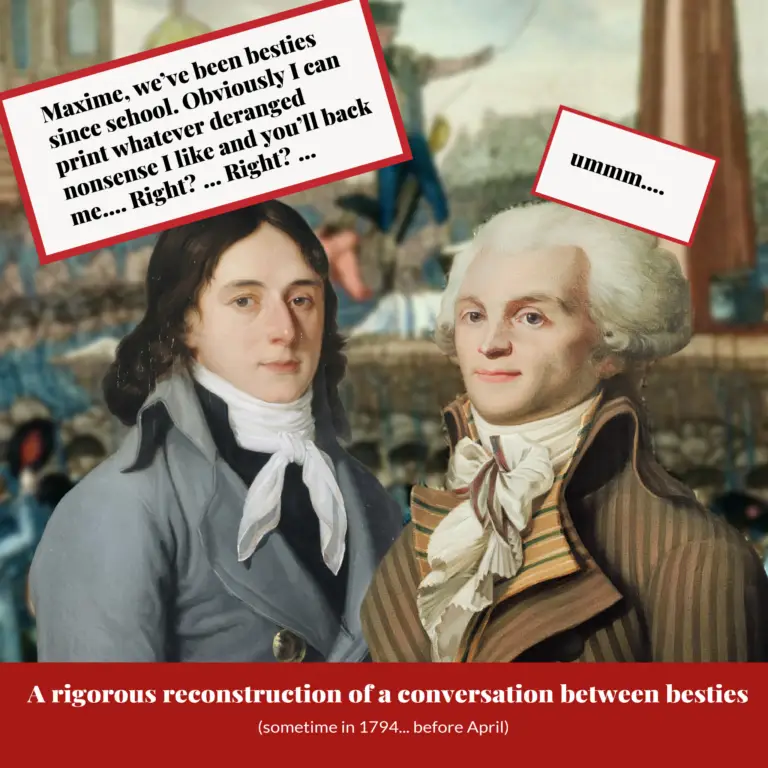
Amateur Voltaire meme captioned 'A rigorous reconstruction of a conversation between besties (sometime in 1794… before April)': Desmoulins says 'Maxime, we've been besties since school. Obviously I can print whatever deranged nonsense I like and you'll back me…. Right? … Right?' and Robespierre answers 'ummm….'
Robespierre, Desmoulins and the Trial of the Indulgents
Painting of the attack on the Tuileries on 10 August 1792: national guardsmen firing up a palace staircase strewn with the bodies of Swiss Guards in red coats.
Henri de La Rochejaquelein at the Tuileries
Quotation card set over a detail of a portrait of General Marceau: “You speak to me of my laurels… they would fill you with dread; they are steeped in the blood of men.”
Marceau: The Republican General Mourned by His Enemies
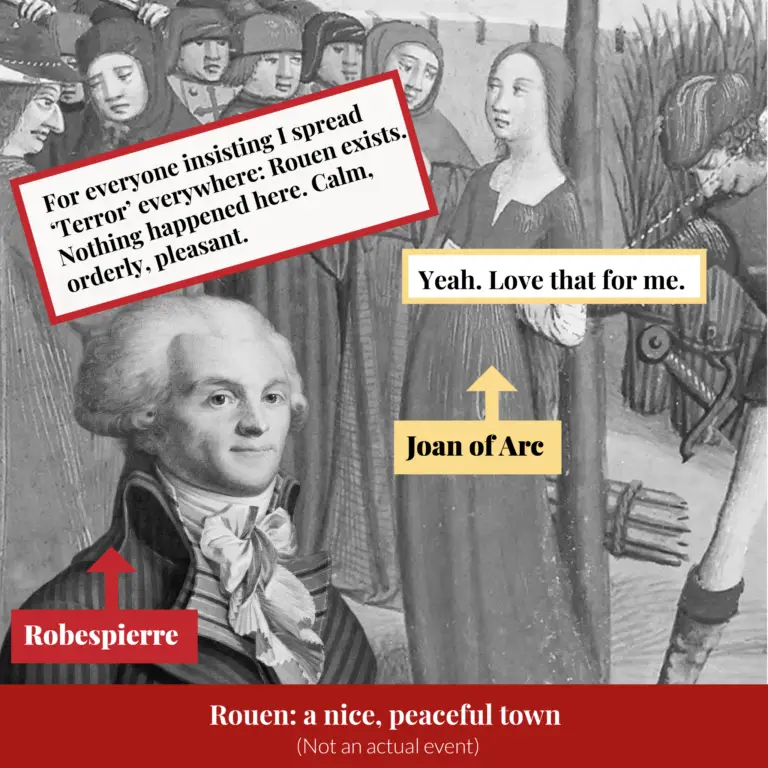
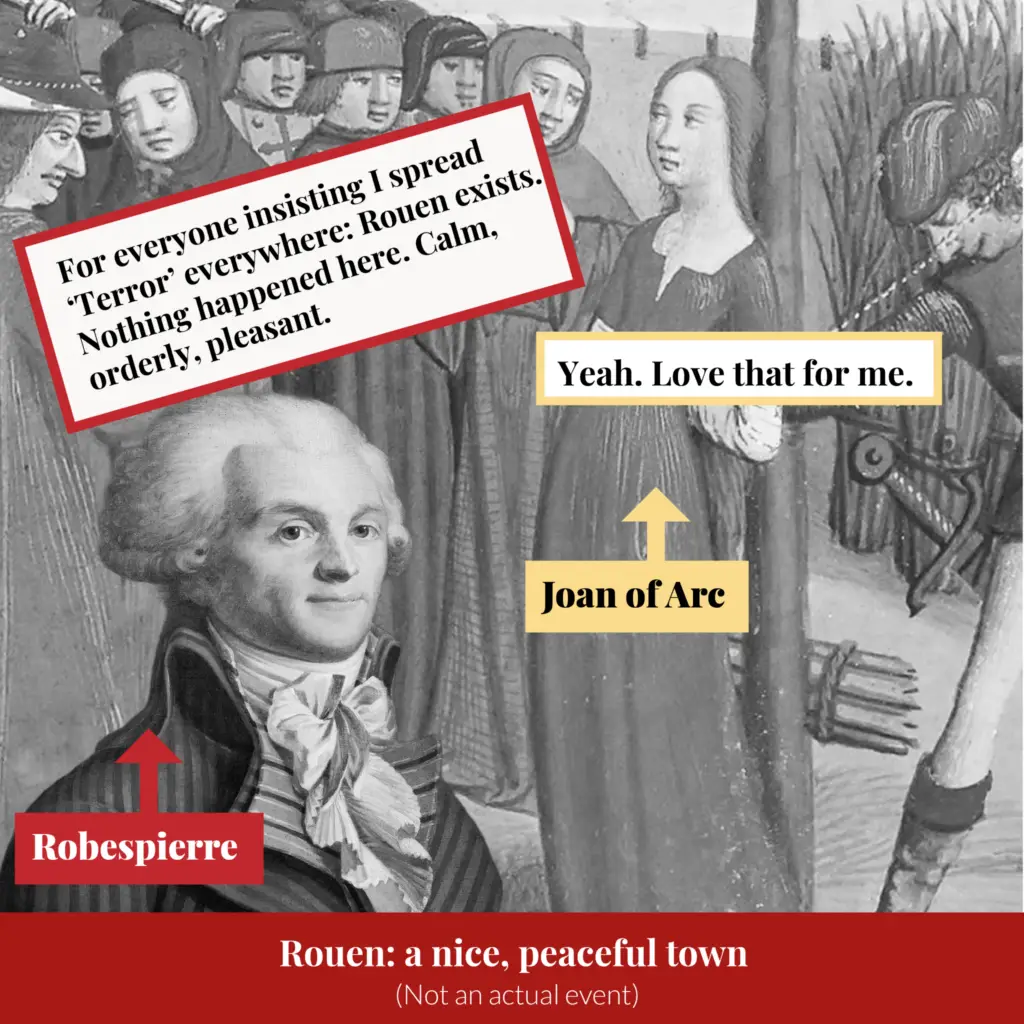
Meme captioned 'Rouen: a nice, peaceful town (Not an actual event)', pairing a labeled medieval illustration with modern speech bubbles: Robespierre insisting Rouen saw no Terror, and Joan of Arc replying, 'Yeah. Love that for me.'
The revolution in Rouen
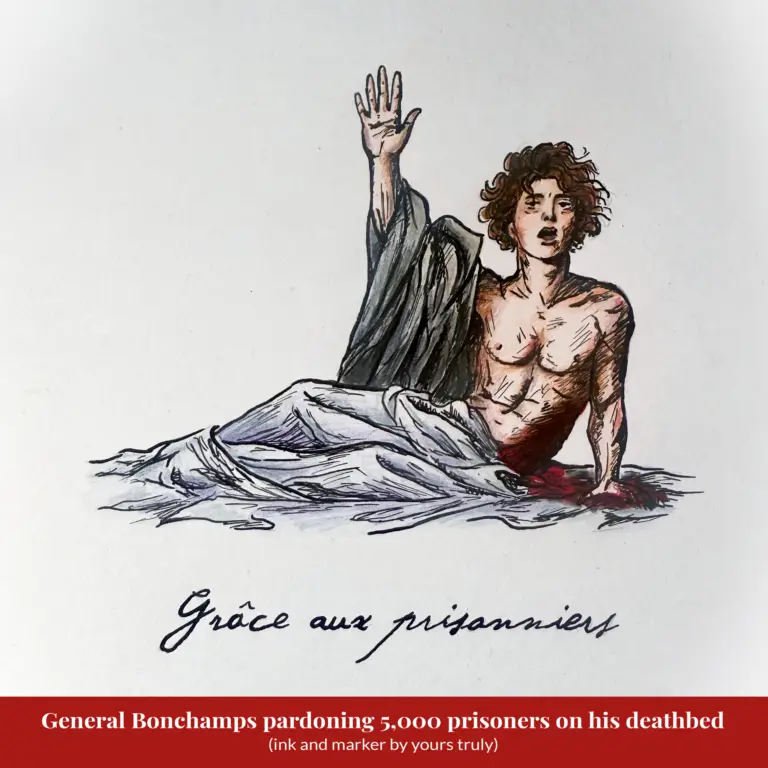
Ink and marker drawing of a dying General Bonchamps half-reclining on a sheet, bare-chested, right arm raised, above the handwritten words 'Grâce aux prisonniers'
The pardon of Bonchamps
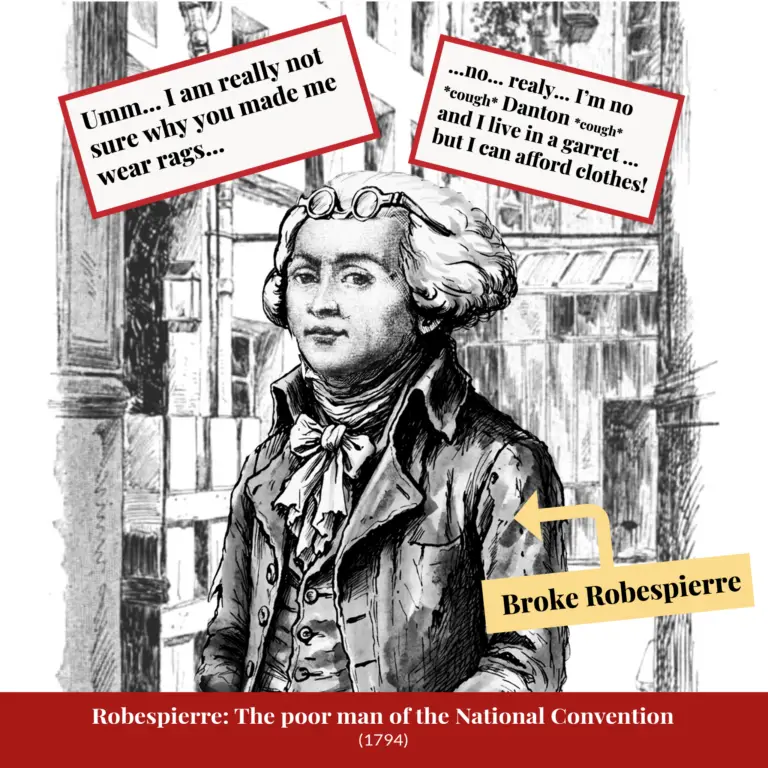
Meme-style illustration of a shabbily dressed Maximilien Robespierre in a Paris street, tagged "Broke Robespierre", with speech bubbles reading "Umm... I am really not sure why you made me wear rags..." and "...no... realy... I am no *cough* Danton *cough* and I live in a garret ... but I can afford clothes!"; caption band: "Robespierre: The poor man of the National Convention (1794)".
Robespierre: The poor man of the National Convention

filter

A B C D E F G H I J K L M N O P Q R S T U V W X Y Z

French Revolution Actors

Aiguillon (d’), Armand-DésiréAlbitte, Antoine-LouisAlquier, Charles-Jean-MarieAmar, Jean-PierreAubert du Bayet, Jean-Baptiste AnnibalAugereau, Charles Pierre FrançoisAutichamp (d’), Charles de Beaumont2Babeuf, François-NoëlBacharetie de Beaupuy, Armand MichelBailly, Jean-SylvainBarbaroux, Charles Jean MarieBarère, BertrandBarnave, AntoineBarras, PaulBeauharnais (de), AlexandreBeauharnais (de), JoséphineBernadotte, Jean-Baptiste JulesBerruyer, Jean-FrançoisBertier de Sauvigny, Louis Bénigne FrançoisBesenval (de), Pierre VictorBillaud-Varenne, Jacques-NicolasBoissy d’Anglas, François-AntoineBonaparte, LucienBonaparte, Napoléon1Bonchamps (de), Charles2Bonchamps, Marie Renée Marguerite de Scépeaux, marquise de1Bordereau, Renée (Langevin)Bouillé (de), François Claude AmourBrissot, Jacques-PierreBrune, Guillaume Marie-AnneBrunswick (of), Charles William FerdinandBulkeley, Céleste Julie Michèle Talour de La CartrieBuonarroti, FilippoBurke, EdmundBuzot, François-Nicolas-LéonardCadoudal, GeorgesCalonne (de), Charles AlexandreCambacérès, Jean-Jacques-RégisCambon, Pierre-JosephCanclaux, Jean-Baptiste Camille deCarnot, LazareCarrier, Jean-BaptisteCathelineau, JacquesCazalès, Jacques-Antoine-MarieChalbos, AlexisCharette (de), François AthanaseCharles X (comte d’Artois)Chaumette, Pierre-Gaspard1Chouan, JeanClavière, ÉtienneClermont-Tonnerre (de), StanislasCloots, AnacharsisCollot d’Herbois, Jean-MarieComte de La BouëreCondé (de), Louis-Joseph de BourbonCondorcet, Nicolas de CaritatConstant, BenjaminCorday, CharlotteCordellier-Delanoüe, Étienne Jean-FrançoisCouëtus, Jean-Baptiste deCouthon, GeorgesCustine (de), Adam-Philipped’Elbée, MauriceDanton, Georges1Daunou, Pierre Claude FrançoisDavid, Jacques-LouisDesaix, Louis Charles AntoineDesmoulins, Camille2Desmoulins, Lucile1Dessalines, Jean-JacquesDonnissan, Guy Joseph deDrouet, Jean-BaptisteDubois-Crancé, Edmond-Louis-AlexisDucos, RogerDugommier, Jacques CoquilleDumas, Thomas-AlexandreDumouriez, Charles-FrançoisDuplay, ÉléonoreDuport, AdrienÉprémesnil (d’), Jean-Jacques DuvalFabre d’Églantine, Philippe-François-Nazaire1Fauchet, Claude FrançoisFéraud, Jean BertrandFersen (von), Hans AxelFleuriot de La Freulière, Jacques-NicolasForestier, HenriFouché, JosephFoullon de Doué, Joseph FrançoisFouquier-Tinville, Antoine QuentinFrancis IIFrançois de Neufchâteau, Nicolas-LouisFrederick William IIFréron, Louis-Marie-StanislasGensonné, ArmandGobel, Jean-Baptiste-JosephGohier, Louis-JérômeGontaut-Biron, Armand Louis deGouges (de), OlympeGrégoire, Henri1Grignon, LouisGuadet, Marguerite-ÉlieHanriot, FrançoisHaxo, NicolasHébert, Jacques RenéHédouville, Gabriel Marie Joseph d'Hérault de Séchelles, Marie-Jean1Hoche, Louis LazareIsnard, MaximinJoly, Jean-BaptisteJourdan, Jean-Baptiste1Jullien, RosalieKellermann, François ChristopheKléber, Jean-Baptiste1La Bouëre, Antoinette-Charlotte Le Duc, comtesse deLa Fayette (de), Gilbert du MotierLa Révellière-Lépeaux, Louis-MarieLa Roche Saint-André, Louis-Marie deLa Rochefoucauld, Marie-Adélaïde de La Touche-Limouzinière, comtesse deLa Rochejaquelein, Marie-Louise-Victoire de Donnissan deLacombe, ClaireLakanal, JosephLamballe, Marie-Thérèse-Louise de Savoie-Carignan, princesse deLameth, Alexandre-Théodore-VictorLameth, Charles-Malo-FrançoisLameth, ThéodoreLanjuinais, Jean-DenisLavoisier, Antoine LaurentLe Bas, Élisabeth DuplayLe Bas, PhilippeLe Bon, JosephLe Chapelier, Isaac-René-GuyLe Peletier de Saint-Fargeau, Louis-MichelLéchelle, JeanLéon, PaulineLeopold IILescure (de), Louis-Marie2Lindet, RobertLoménie de Brienne, Étienne CharlesLouis XVI1Louis XVIILouis XVIII (comte de Provence)1Louverture, ToussaintLouvet de Couvray, Jean-BaptisteLucas de La Championnière, Pierre-SuzanneLyrot de La Patouillère, François deMadame ÉlisabethMaillard, Stanislas-MarieMalesherbes (de), Chrétien-Guillaume de LamoignonMalouet, Pierre VictorMarat, Jean-PaulMarcé, Louis Henri François deMarceau, François Séverin1Maria Carolina of AustriaMarie Antoinette1Marigny, Gaspard de Bernard deMasséna, AndréMaury, Jean-SiffreinMerlin (de Thionville), Antoine-ChristopheMerlin de Douai, Philippe-AntoineMirabeau, Honoré-Gabriel RiquetiMomoro, Antoine-FrançoisMonge, GaspardMoreau, Jean Victor MarieMoulin, Jean-François-AugusteMounier, Jean JosephNecker, JacquesNelson, HoratioNoailles (de), Louis Marc AntoineOrléans (d’), Louis-Philippe-JosephPache, Jean-NicolasPaine, ThomasPétion, JérômePichegru, Jean-CharlesPierre Philippeaux1Pitt, WilliamPius VIPoirier de Beauvais, BertrandPrieur (de la Côte d'Or), Claude-AntoinePrieur (de la Marne), Jean-LouisPuisaye (de), JosephQuétineau, PierreRabaut Saint-Étienne, Jean-PaulReubell, Jean-FrançoisRipault de La Cathelinière, Louis-FrançoisRobespierre, Augustin1Robespierre, Charlotte1Robespierre, Maximilien5Rochejaquelein (de la), AugusteRochejaquelein (de la), Henri1Rochejaquelein (de la), LouisRoederer, Pierre-LouisRoland, Jean-MarieRoland, ManonRomme, GilbertRonsin, Charles PhilippeRossignol, Jean AntoineRouget de Lisle, Claude-JosephRoux, JacquesRoyrand, Charles Aimé deSaint-André, JeanbonSaint-Just, Louis Antoine3Santerre, Antoine JosephSapinaud de Boishuguet, Jeanne-Michelle-Ambroise Talour de La Cartrie deSapinaud de La Rairie, CharlesSapinaud de La Verrie, LouisScépeaux de Bois-Guignot, Marie Paul deSieyès, Emmanuel-JosephSonthonax, Léger-FélicitéStaël (de), GermaineStofflet, Jean-NicolasSuzannet, Pierre Constant deTalleyrand-Périgord, Charles-MauriceTallien, Jean-LambertTalmont (Prince de), Antoine-Philippe de La TrémoilleThéroigne de Méricourt, Anne-JosèpheThouret, Jacques-GuillaumeThuriot, Jacques-AlexisTravot, Jean-PierreTreilhard, Jean-BaptisteTuncq, AugustinTurreau, Louis MarieVadier, Marc-Guillaume AlexisVergniaud, Pierre-VicturnienVimeux, Louis AntoineVincent, François-NicolasWestermann, François-Joseph
HomePerspectivesTravel DiaryThe revolution in Rouen
Share

The revolution in Rouen

Rouen was one of the quietest major French cities during the Terror, with no executions in Year II. Today, however, the city remembers a very different execution: that of Joan of Arc

Before entering the Vendée, which enjoys the dubious distinction of having the most executions during the Terror, we stopped in a city at the opposite extreme: Rouen. In Year II (1793–1794) it saw exactly zero executions 1.

The Most Boring Revolution

Rouen entered the Revolution as a major textile centre and port, whose importance was already sliding downhill. Its cottons and linens have earned it the title “Manchester of France,” but, realistically, by that point, England was outpacing it, and Le Havre had taken over transatlantic trade.

Its revolutionary story is remarkable in how unremarkable it is. In 1789 there were food riots and factory sackings, but order returned quickly under a municipal council. It became chef-lieu 2 of the new Seine-Inférieure department, governed by the same moderate commercial elite as before. The Civil Constitution of the Clergy 3 split opinion but caused little unrest.

War broke out in April 1792. Blockade and inflation hit hard, so authorities enforced the Law of the General Maximum on goods and wages. Merchants and artisans were not amused, but did little in retaliation. The effect of the revolutionary government in Rouen was felt chiefly through price control measures  Grain, flour, and firewood were sold at regulated prices, and officials prosecuted hoarders.

Food riots did break out occasionally.For example, May 1793 saw crowds seize grain, with National Guards called to restore calm. That being, said Rouen never descended into Paris-style lynchings.

In 1793–1794 Rouen applied the Law of Suspects, secularised churches and closed convents, even turning the cathedral into a Temple of Reason, but it neither rebelled nor empowered ultra-radicals; suspects were mostly imprisoned or sent elsewhere for trial, and no guillotine operated in the city.

While these controls temporarily eased shortages, they also caused black markets and did not prevent acute scarcity in 1794–95, when harvest failure and assignat inflation produced famine conditions. The winter of 1794–95 was especially grim: bread rationing was instituted, and soup kitchens tried to feed thousands of destitute Rouennais.

Rouen’s restraint came from cautious local leadership, a public more interested in bread than ideology, the absence of a federalist revolt, and political clubs more concerned with order than zeal. After Thermidor, prisoners were released without much fuss. The city came out of it intact, if somewhat bureaucratically restructured.

The pattern was often that popular protests erupted over high prices or hunger, and the municipal government responded with negotiation and policing.

If your image of the Revolution involves daily executions, mobs with pikes and hanging aristocrats from lap posts , Rouen will disappoint. Life here during the early Republic was, relatively speaking, uneventful.

Which is why I didn’t expect to find much Revolutionary heritage on arrival. And I didn’t.

And yet, for a city with no Terror executions, Rouen’s modern tourist identity is built almost entirely on one execution: that of Joan of Arc (1431).

· · ·

Joan of Arc

Walk the streets of old Rouen and you quickly notice that its tourist office decided the main claim to fame is burning a teenage girl at the stake and dumping her ashes in the Seine.

I’m no medievalist, but if Joan isn’t familiar, here’s the short version to spare you a search. Joan of Arc (c.1412–1431) was a peasant girl from Domrémy in Lorraine who claimed divine visions told her to back Charles VII and help drive out the English during the tail end of the Hundred Years’ War. In 1429, aged seventeen, she convinced Charles to let her join his army. Her arrival changed morale: she helped lift the siege of Orléans and got Charles crowned at Reims. That was her high point.

Things went downhill after that. She was captured in 1430, sold to the English, and put on trial in Rouen, then under English control. The tribunal, led by Bishop Pierre Cauchon, accused her of heresy, witchcraft, and cross-dressing (because heaven forbid a woman wear trousers during wartime… fetch the smelling salts).

She was convicted and sentenced to death. On 30 May 1431, she was burned at the stake in the Vieux-Marché (Old Market). Witnesses say she prayed until the end, calling on Jesus as the flames rose. Her ashes were tossed in the Seine to stop anyone collecting relics.

The Church of Joan of Arc
The old market in Rouen is gorgeous. Half-timbered Norman houses, cobbled streets, the works. And then right in the middle of it: the most aggressively 1970s building imaginable. That’s the Church of Joan of Arc.
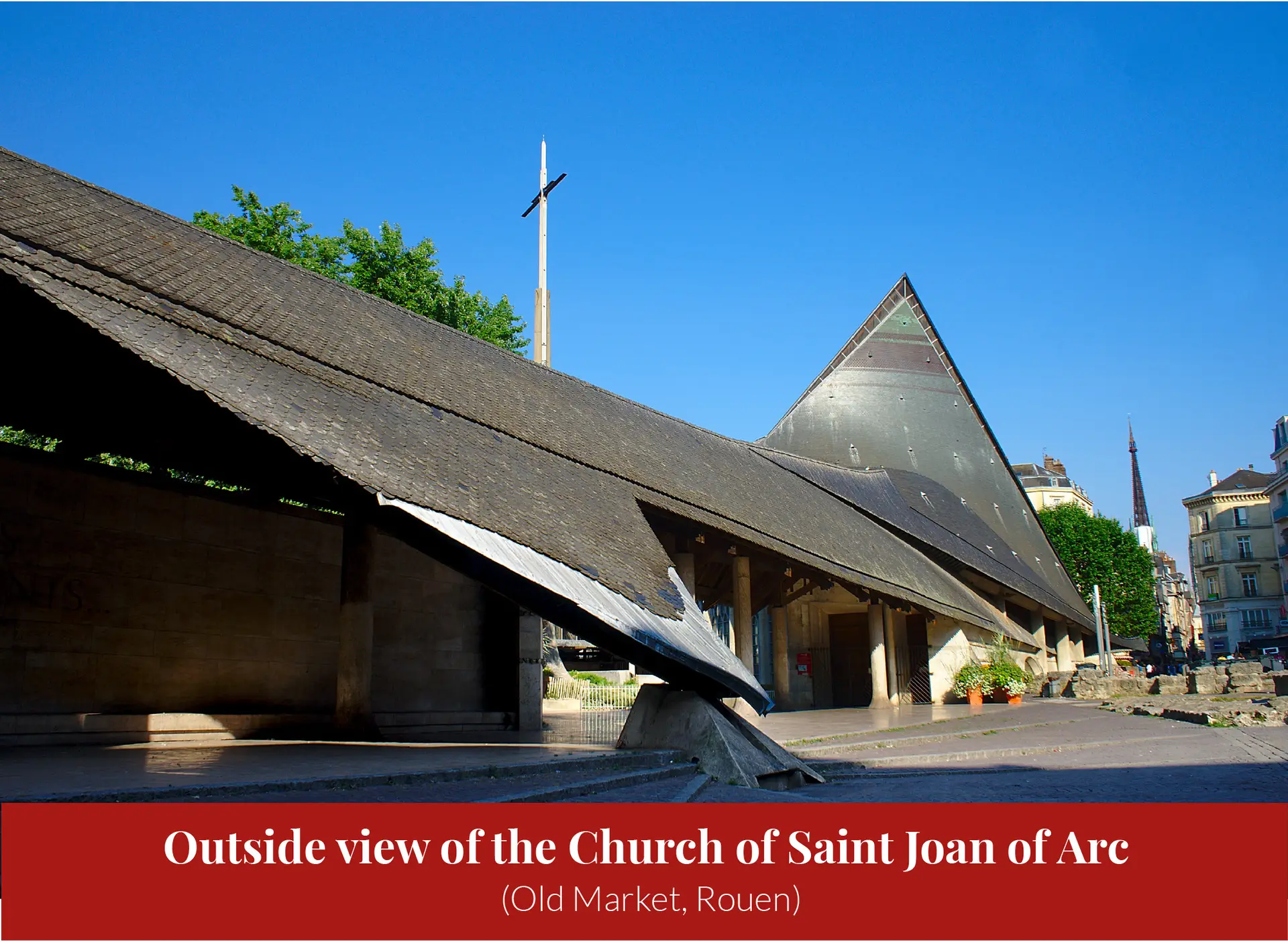
Exterior of the modern Church of Saint Joan of Arc in Rouen's Old Market, its sweeping roofline evoking an overturned longship, under a clear blue sky.

The idea, apparently, was to evoke an overturned longship (as some early churches did) and flames. Let’s just say we’re lucky she was burned. If Joan had been hanged or beheaded, I shudder to think what the architect might have produced.

Inside, the stained glass is the real surprise. It’s 16th-century glass salvaged from the Church of Saint Vincent, destroyed in the Second World War. The windows are luminous, delicate, and very beautiful, which is more than can be said for the rest of the building.
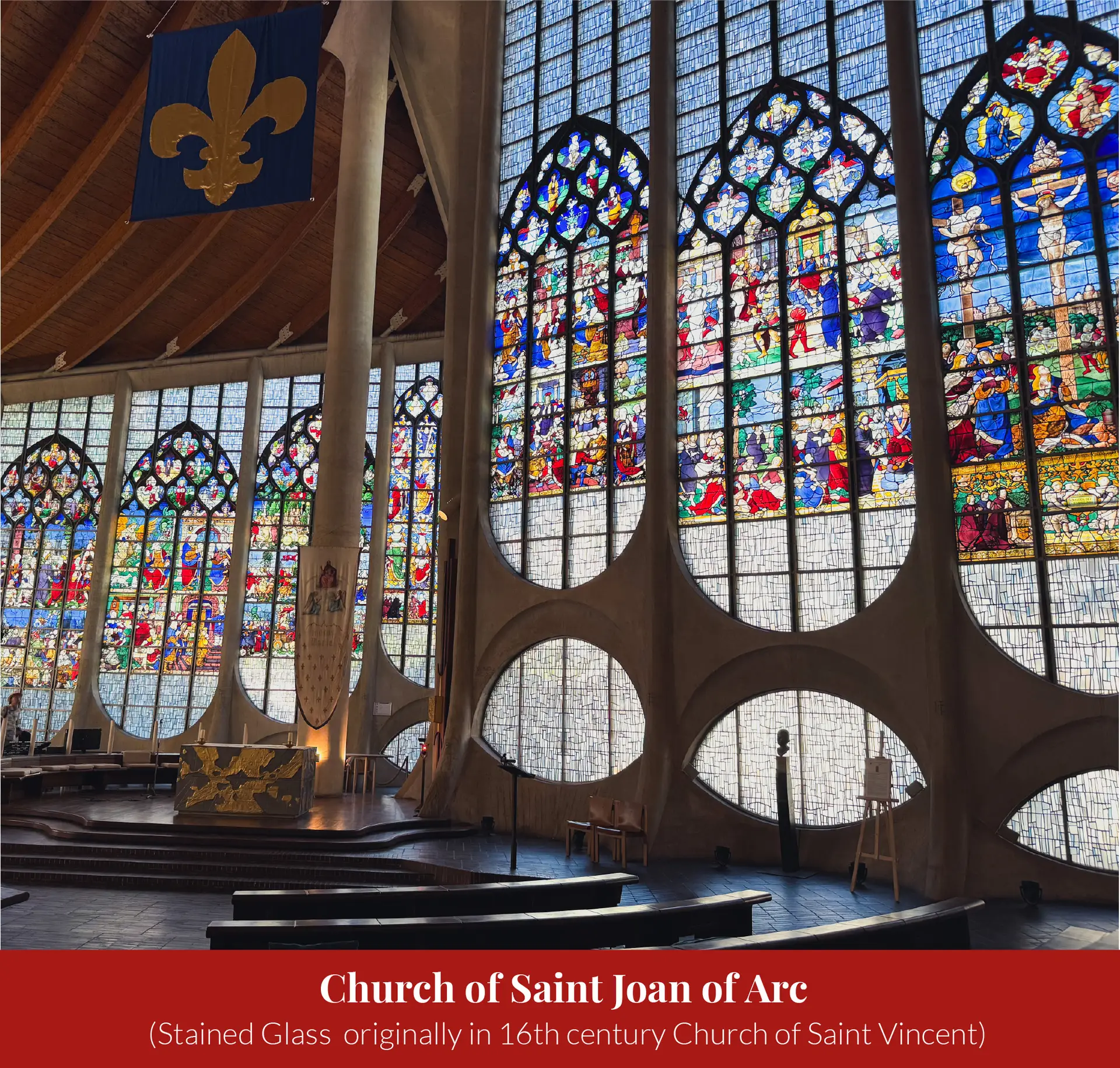
Interior of the Church of Saint Joan of Arc showing tall panels of colourful 16th-century stained glass salvaged from the destroyed Church of Saint Vincent, with wooden pews below.

I’ve never seen a Catholic church like it. I’m not religious, so I’ve no opinion rooted in dogma, but it feels more like a minimalist art gallery than a place of whorsip. Which might suit some people fine. I just wonder if anyone finds it comforting to pray here.

There are artworks inside, all focused on Joan’s martyrdom. They’re beautiful, but again, the overall effect is more museum than church.
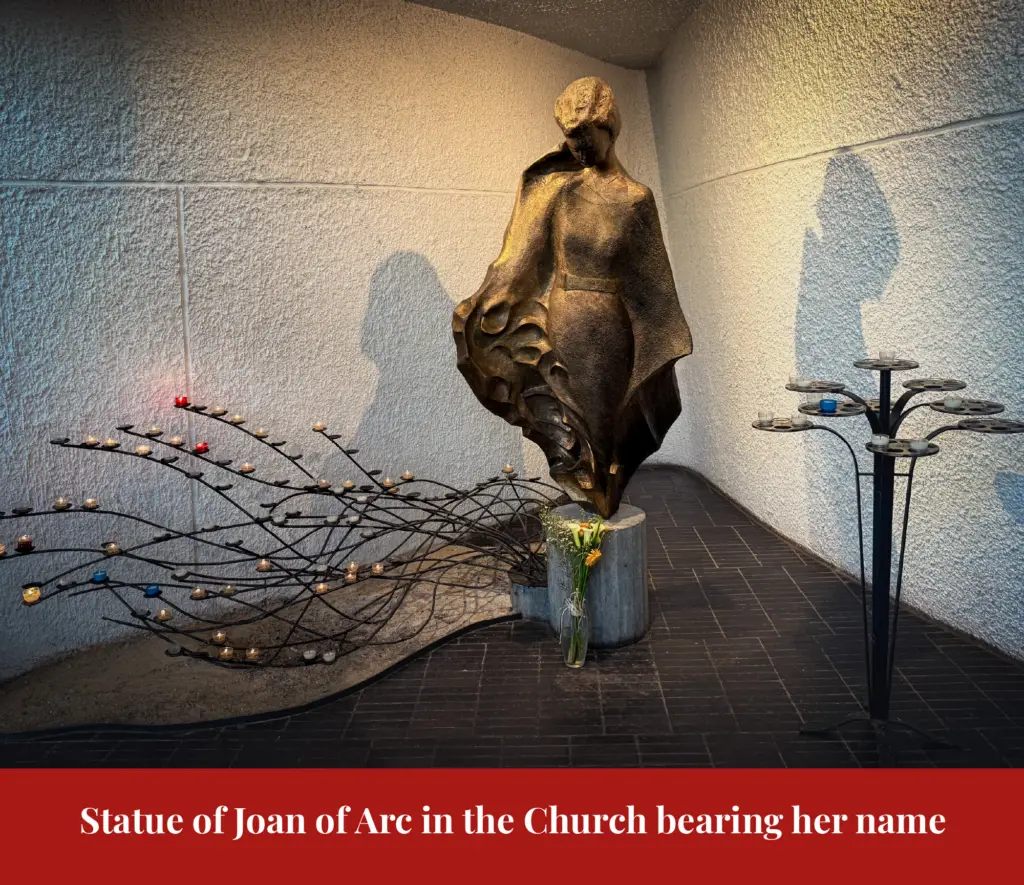
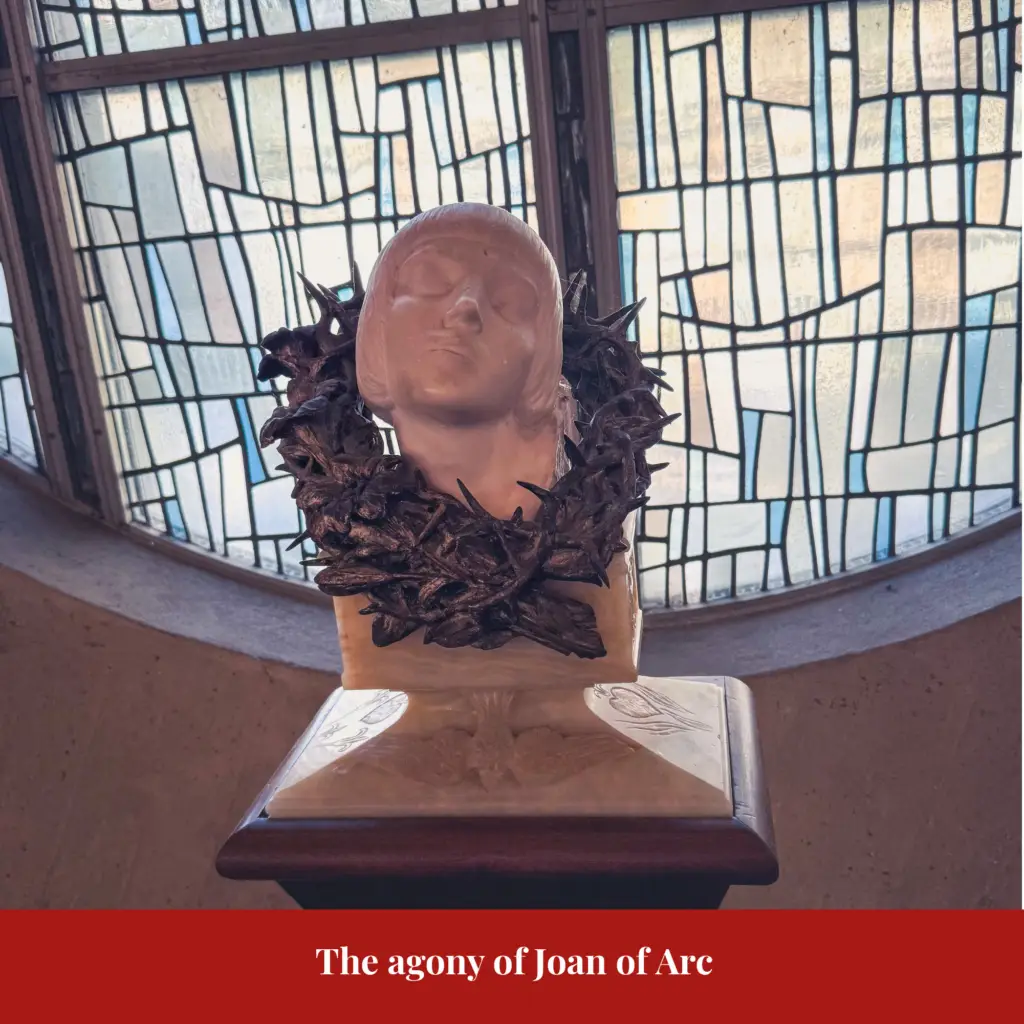
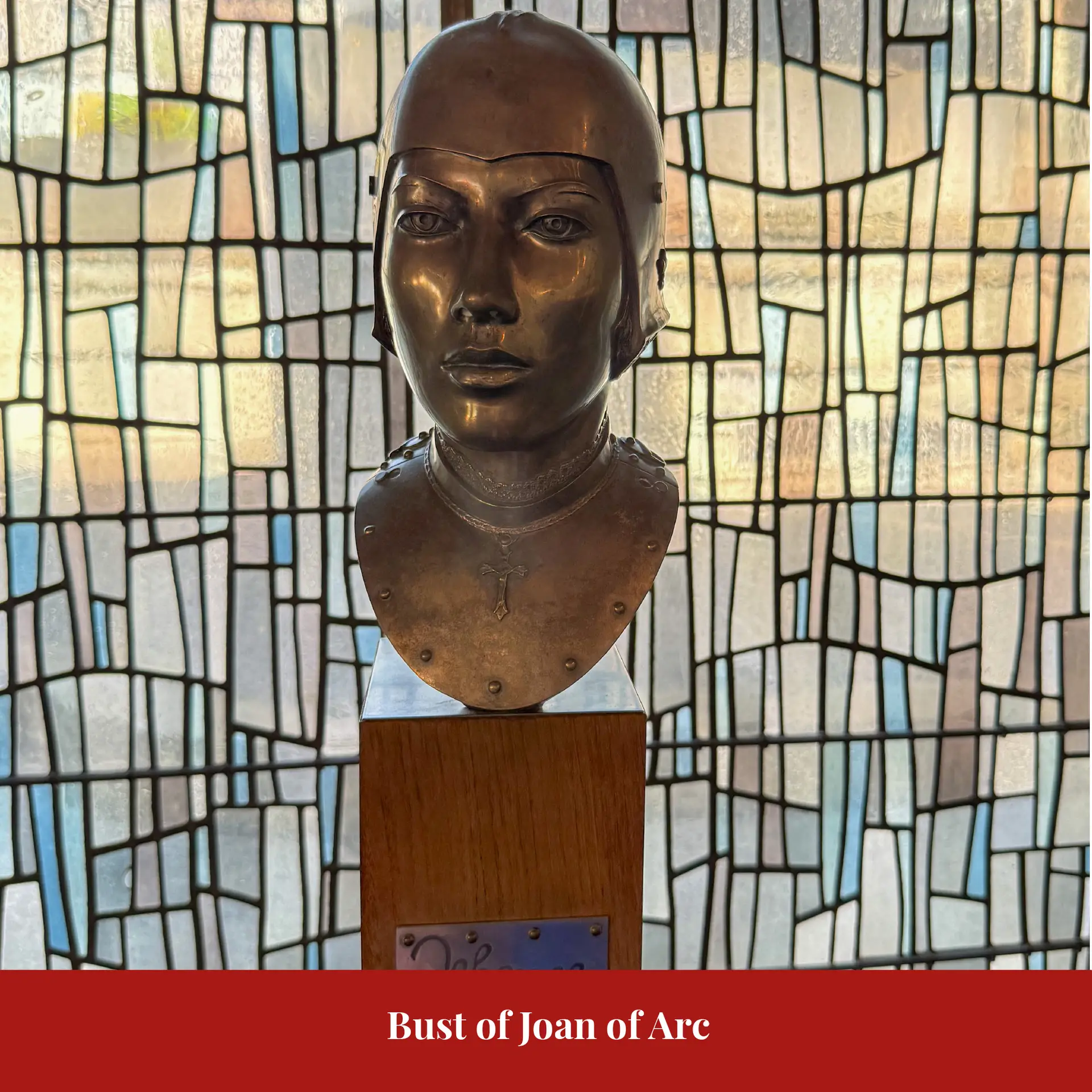
Bronze bust of Joan of Arc wearing a coif and armoured gorget with a small cross pendant, displayed on a wooden plinth against a stained-glass backdrop.

Step outside and you’ll find a metal sculpture meant to mark the site of the stake. I forgot to take a photo. It was dull and the children wanted to go on the carousel.

· · ·

The Food Break

There’s an understanding in this household : I drag us to obscure Vendée-related locations, and my husband gets his reward in food.

In Rouen, I gave in to the obvious and booked us into La Couronne, France’s oldest inn, dating from 1345, conveniently located opposite the church. I couldn’t resist.
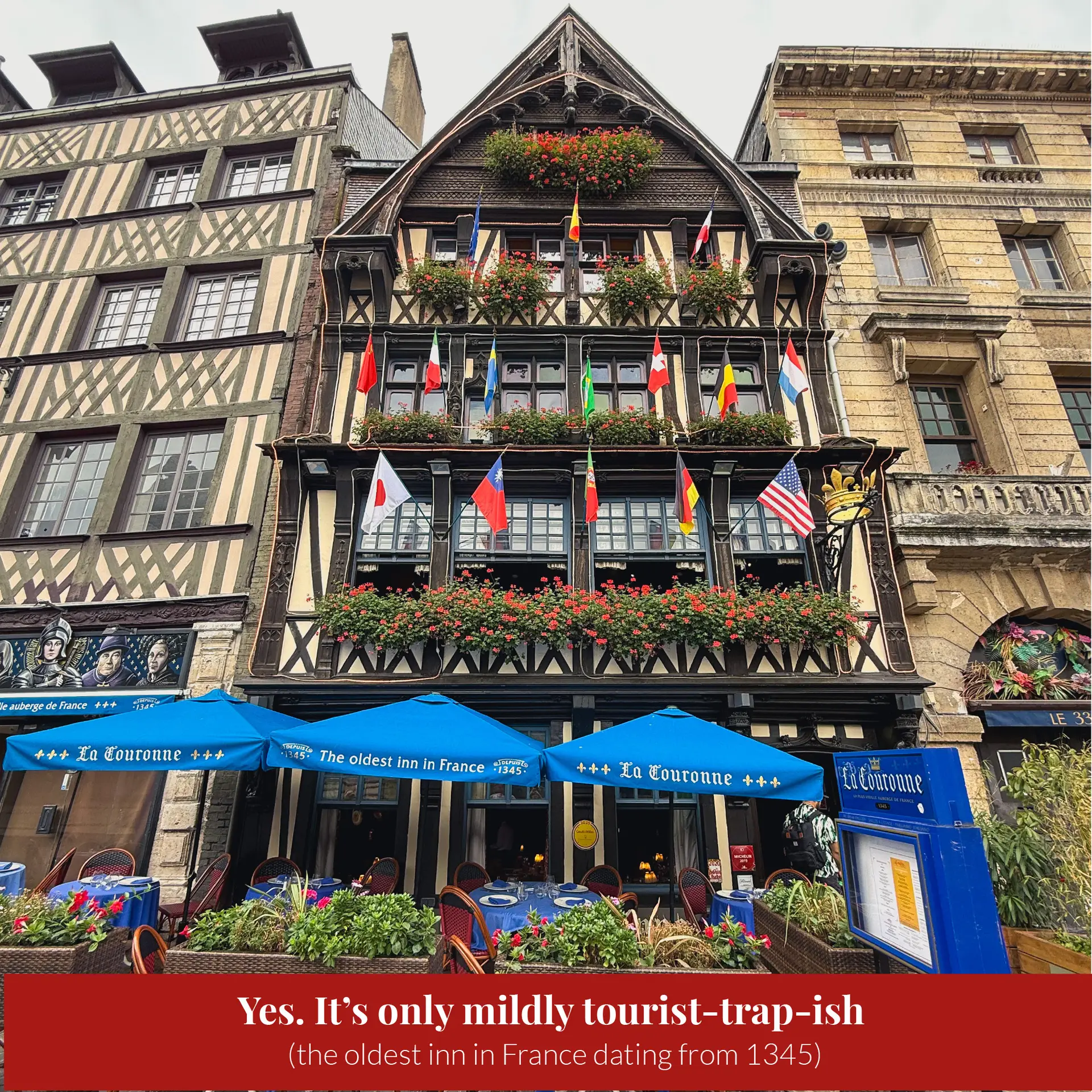
Half-timbered facade of La Couronne restaurant in Rouen, dating from 1345, decorated with international flags and flower boxes, with blue umbrellas over outdoor tables.

The interior is beautiful. Genuinely.
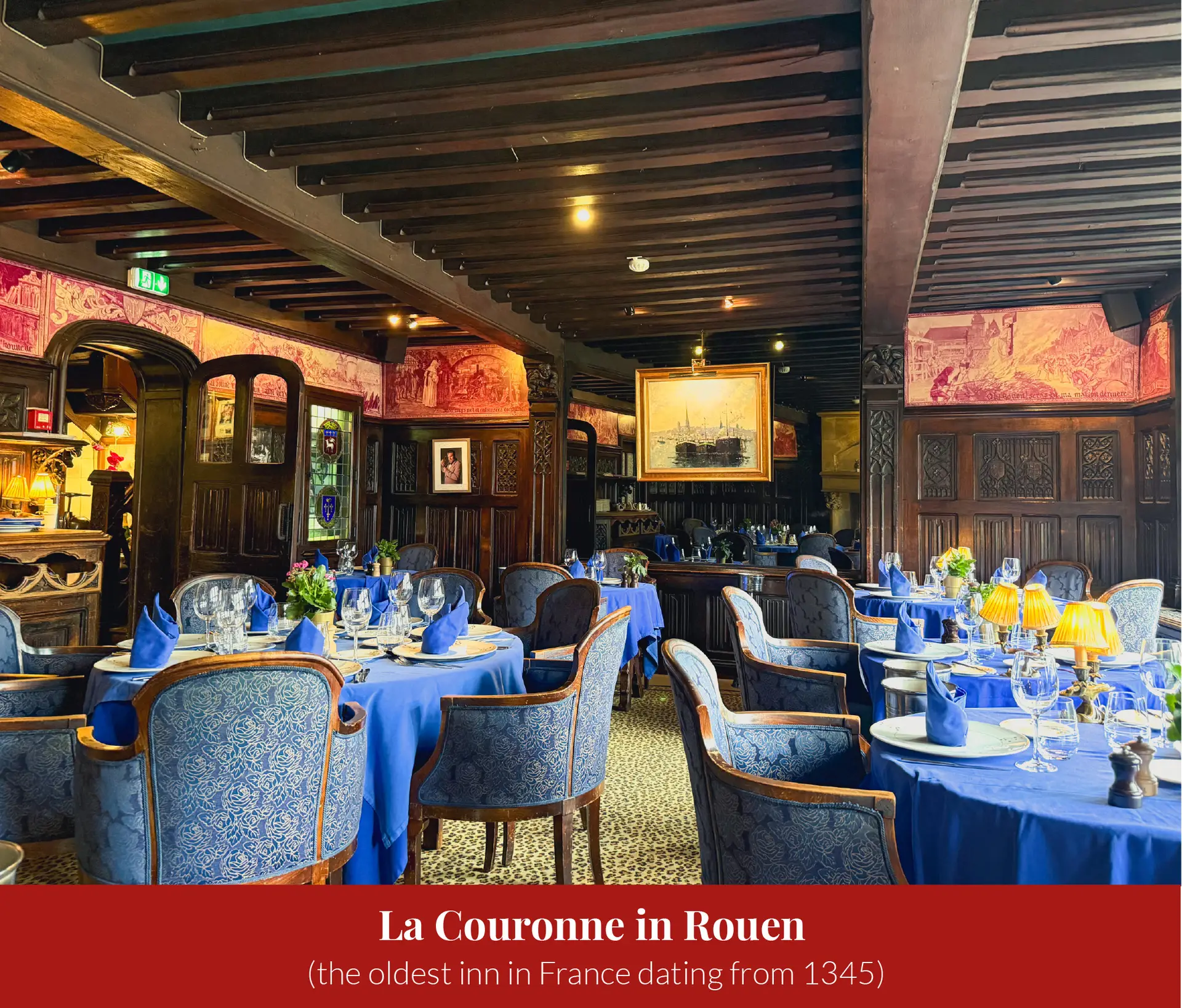
Wood-panelled dining room at La Couronne in Rouen with exposed beams, painted friezes, and tables set with blue linens and wine glasses.

This isn’t a food blog, so I’ll be brief. They really ought to stop trying so hard. If you’re the oldest inn in France, maybe stick to the basics and leave the deconstructed sushi alone. Still, the Norman soufflé with cider at the bottom was excellent. Not much to look at, but genuinely tasty.
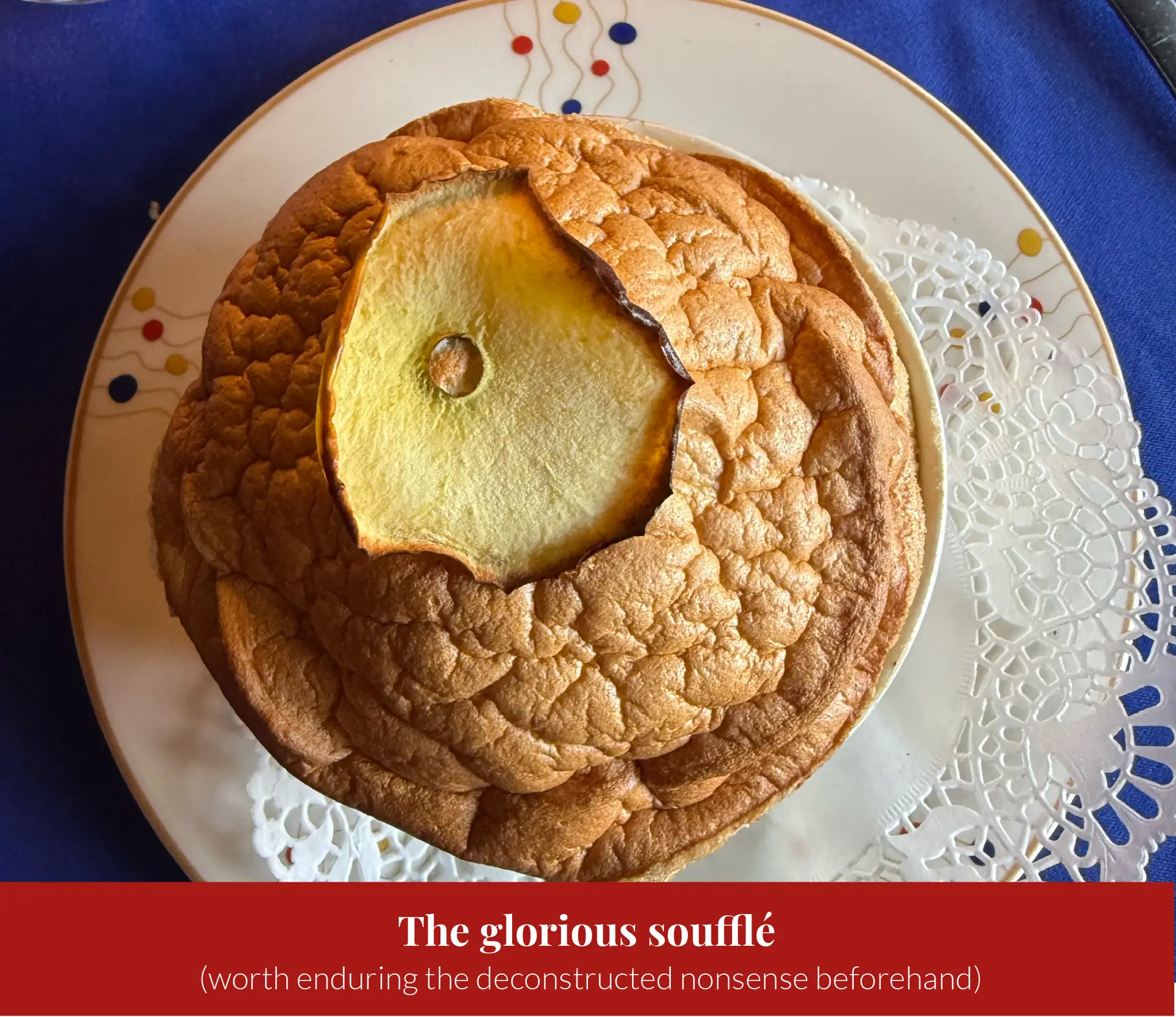
A puffed golden soufflxc3xa9 on a plate, split open to reveal a caramelised apple slice at its base.

That’s Rouen done. Next stop: Normandy, where things begin to go downhill for the Catholic and Royal army.

Footnotes

  1. 1
    Yes, really. Some places didn’t go through mass executions. The “Terror” was neither as widespread nor as industrial as later legend would suggest. I’m working on something that gets into the details.
  2. 2
    Chef de lieu was the capital of a department.
  3. 3
    The Constitution of the Clergy was a 1790 law that tried to nationalise  the Catholic Church in France. It went about as well as you’d expect.

Discussion (0)

Comments are moderated. Corrections and sources welcome; select a passage in the article to quote it.

Join the discussion

No comments yet — be the first to write one.

Comment on this