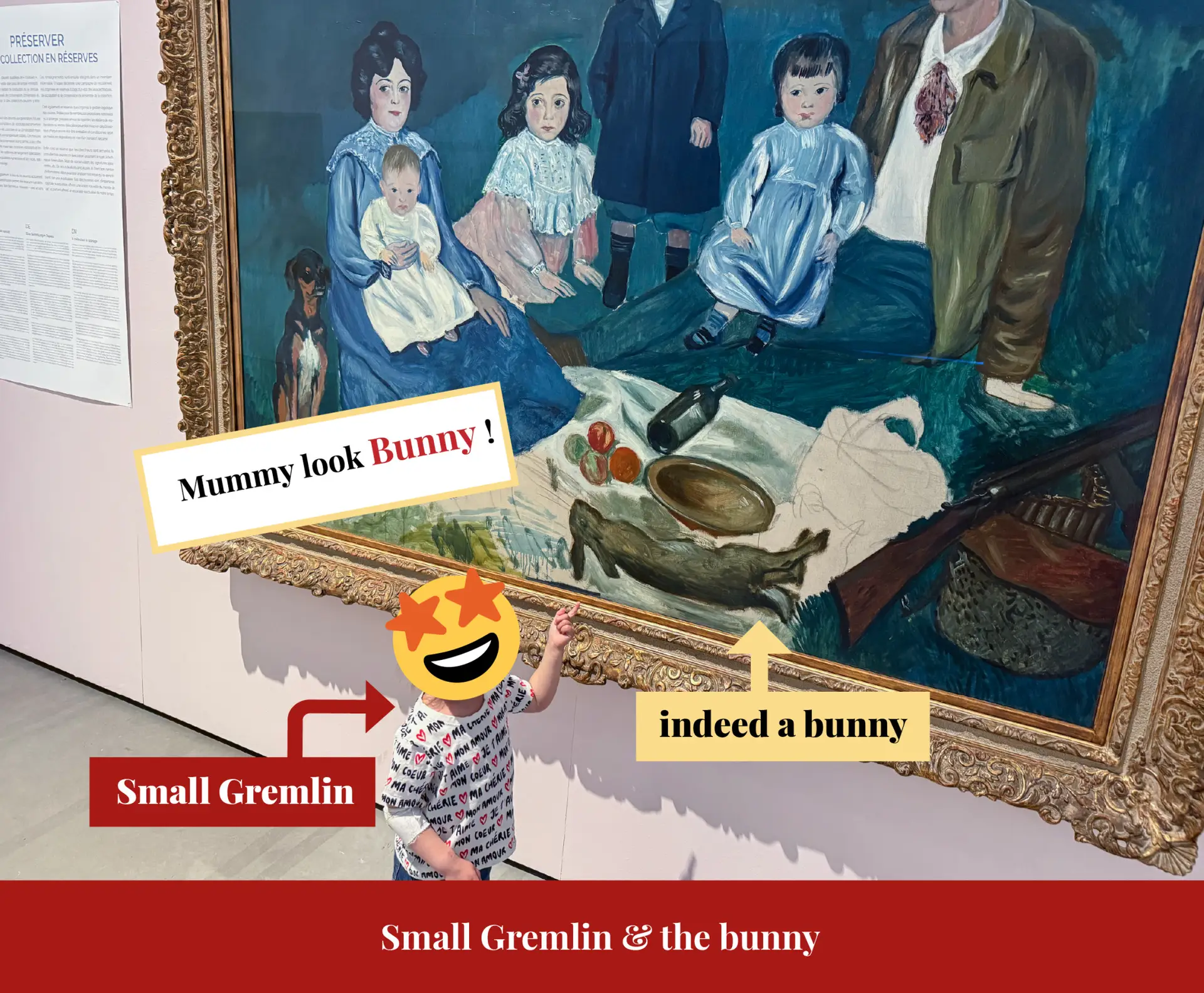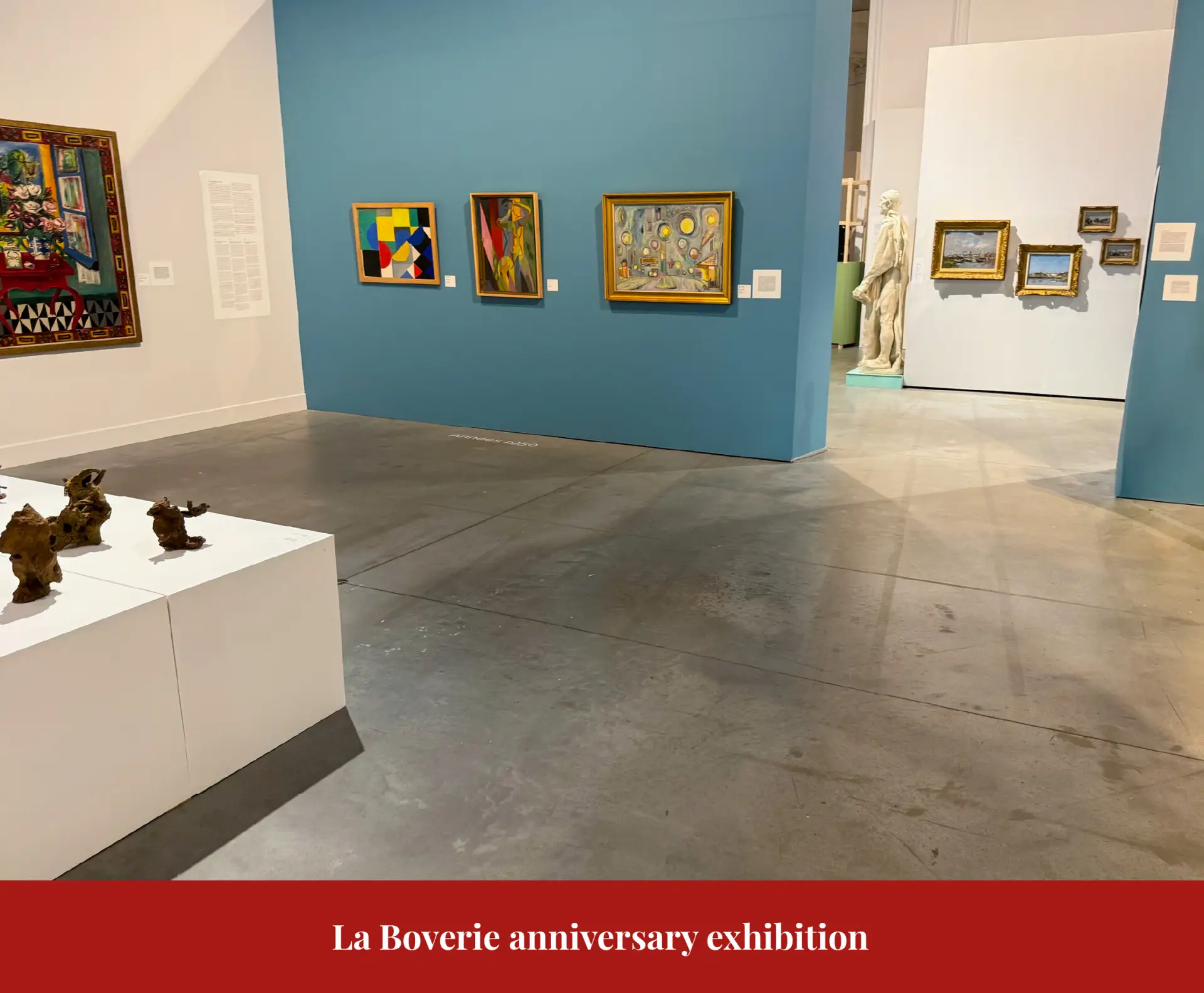
This weekend my oldest gremlin had a birthday party because she is now almost six and has friends and a social life far more active than mine. The youngest gremlin was left at home to sulk without her older sister because, at three, she does not yet have a social life. So I loaded the youngest gremlin into the car and went somewhere she could find an enriching activity that lets me feel reasonably competent as a mother, without making me want to repeatedly bang my head against the nearest available surface because it is too loud and smells wrong: a museum.
Namely, La Boverie in Liège, for its tenth anniversary exhibition.
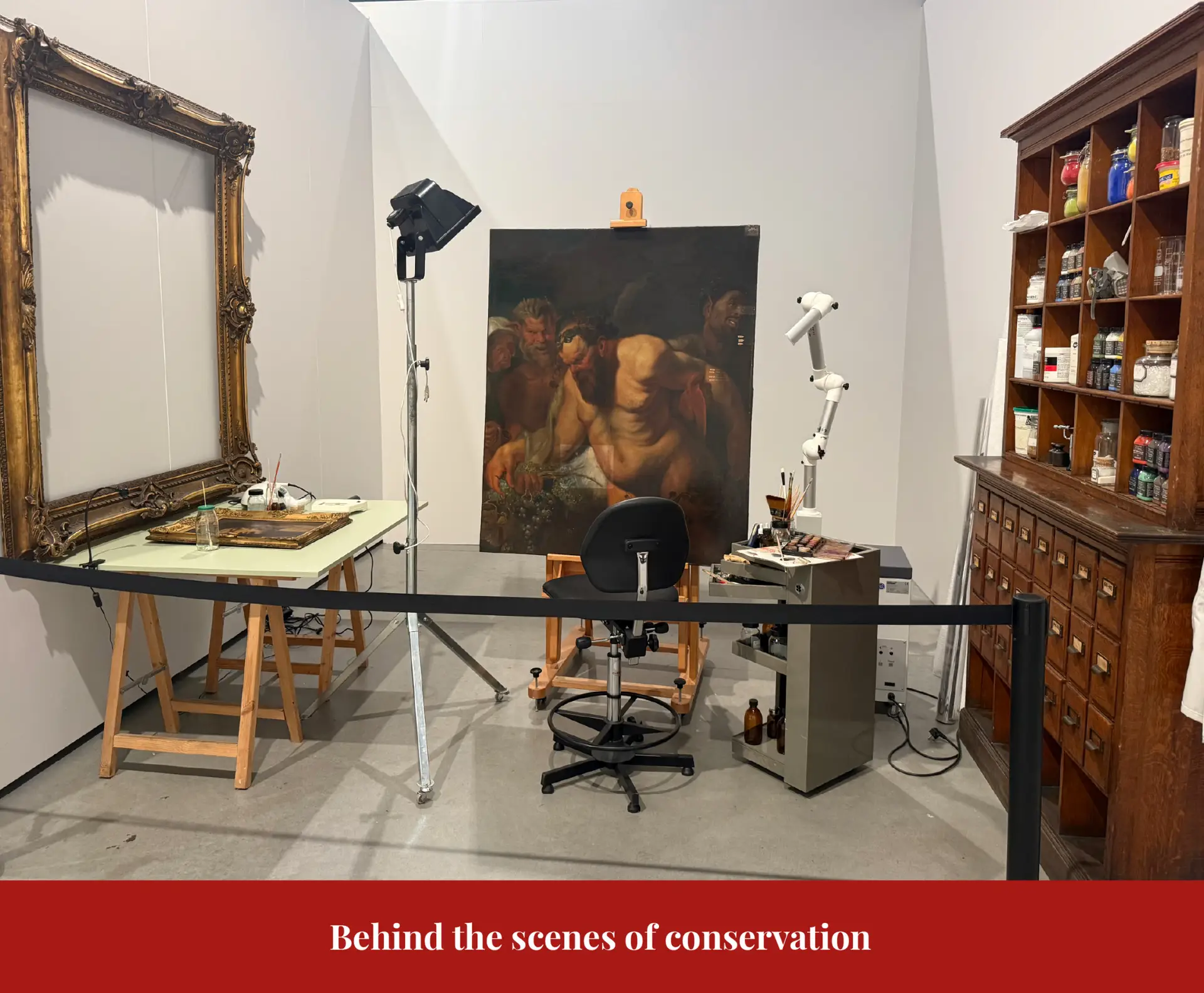
I had wanted to see the exhibition for a while because, instead of merely lining up famous paintings, it also looks at what makes a museum work: conservation, restoration, scientific imaging, loans, storage, exhibition design, the whole quiet bureaucracy of museum life.
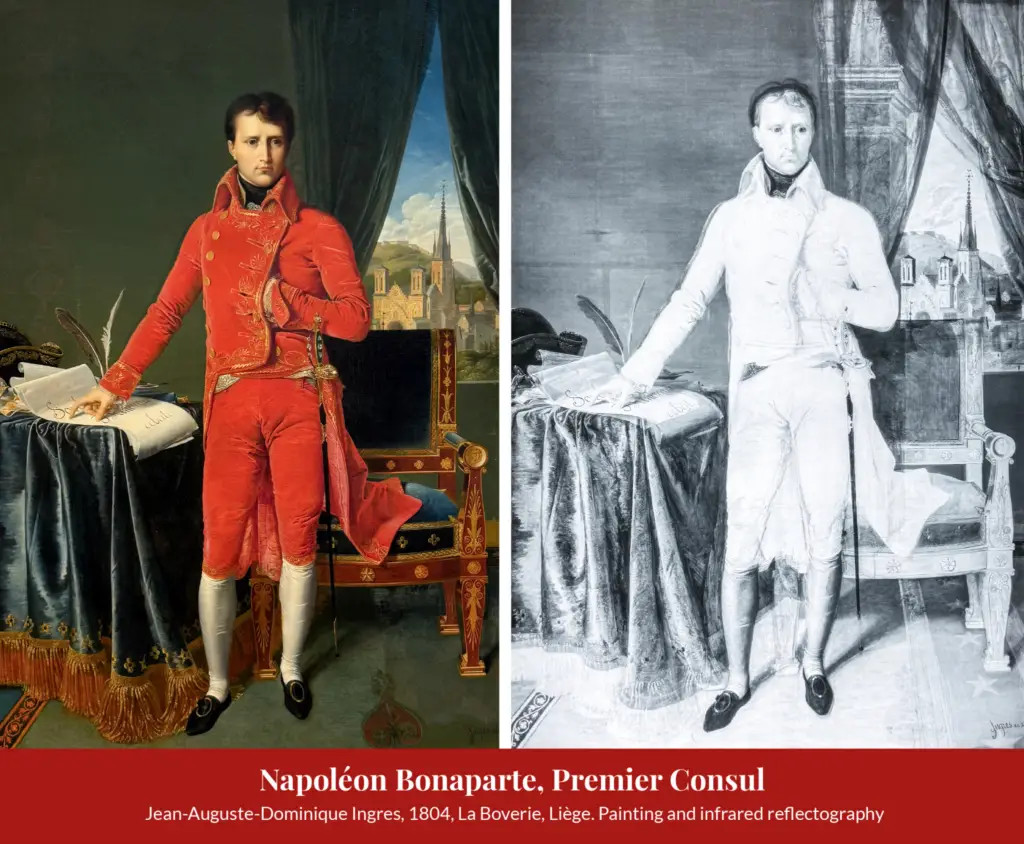
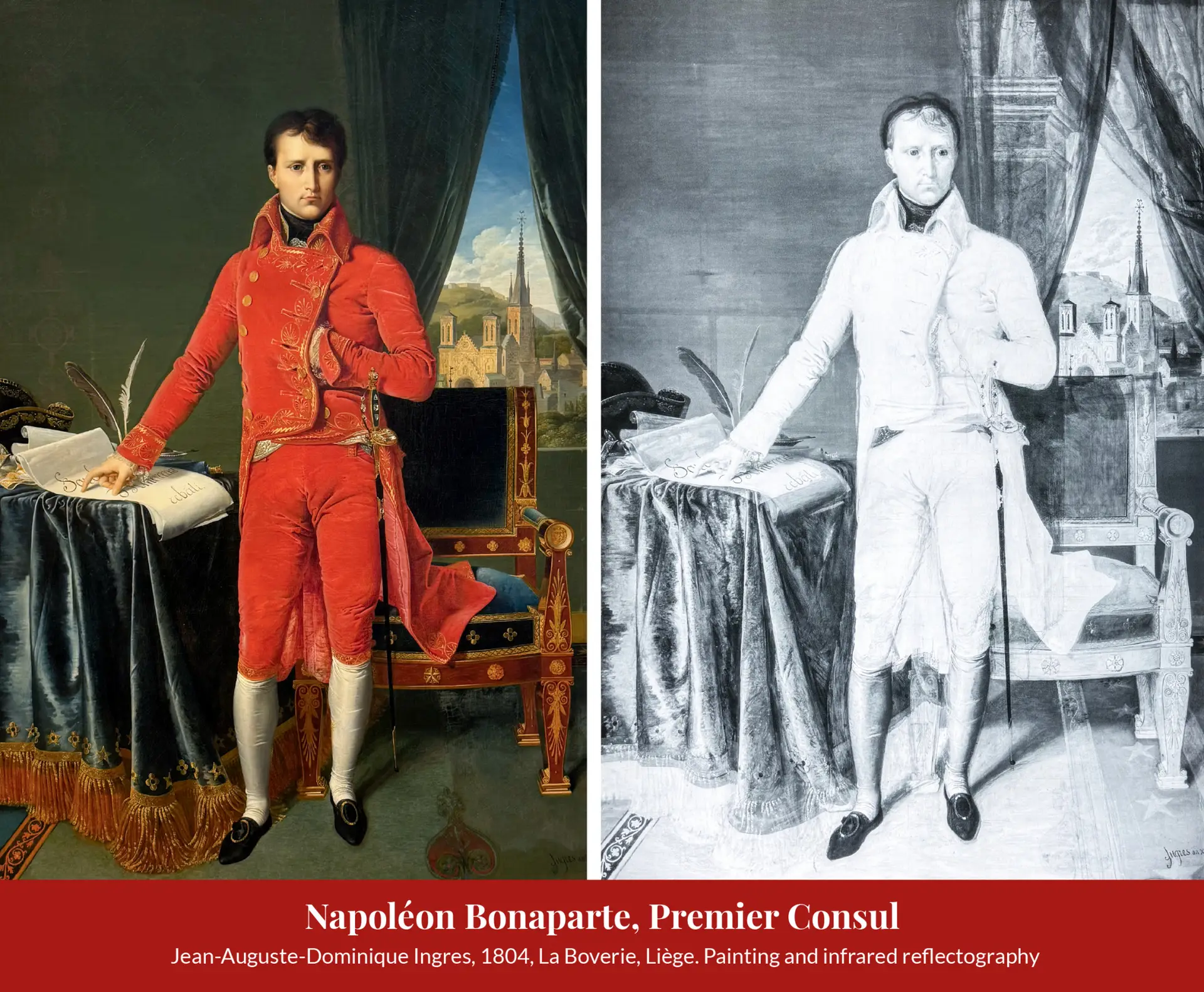
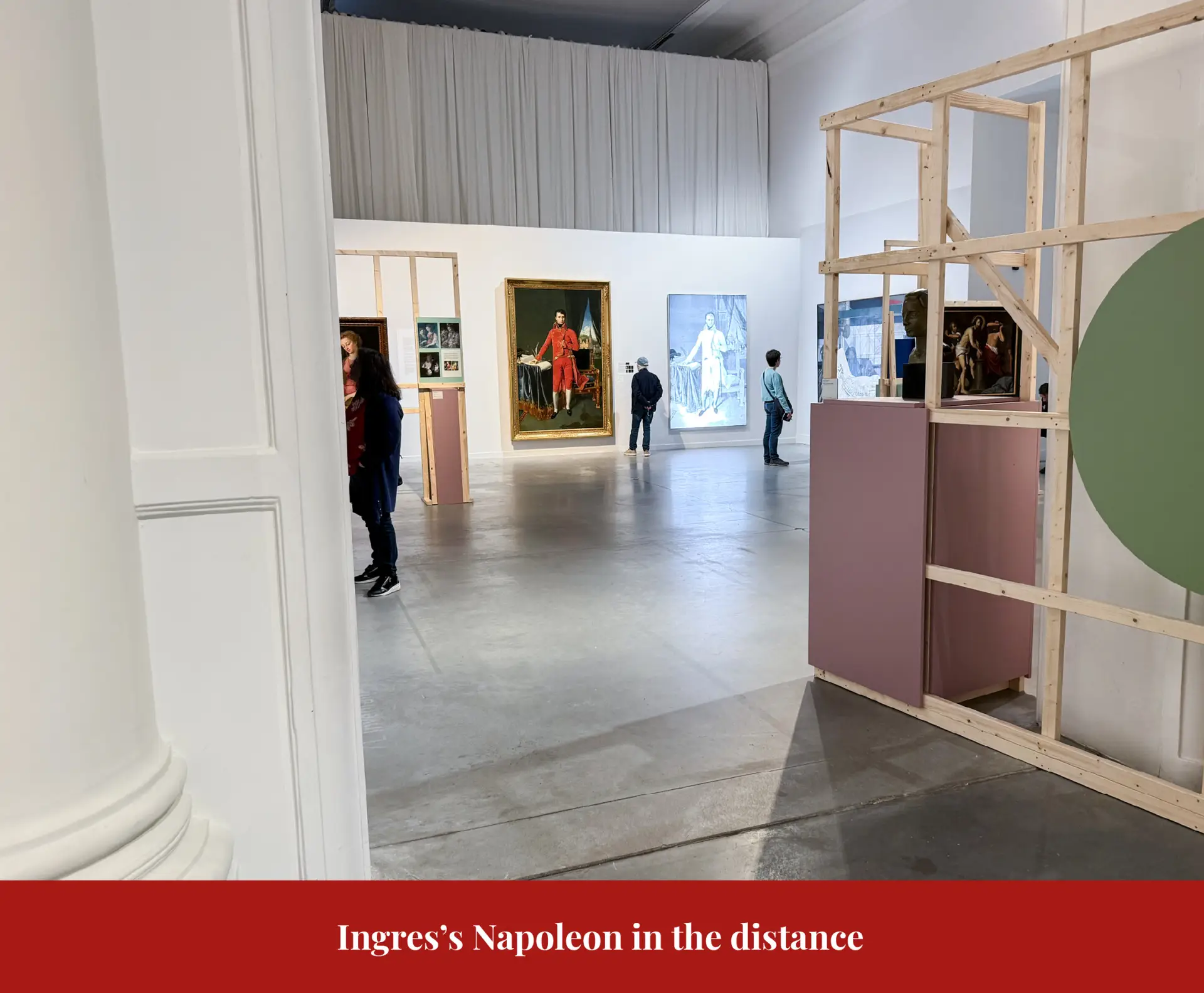
And there, in the middle of this very modern lesson in museum work, while the small gremlin was pointing at a still life and screaming “bunny”, stood this fine gentleman: Jean-Auguste-Dominique Ingres’s Napoléon Bonaparte, Premier Consul, painted in 1804.
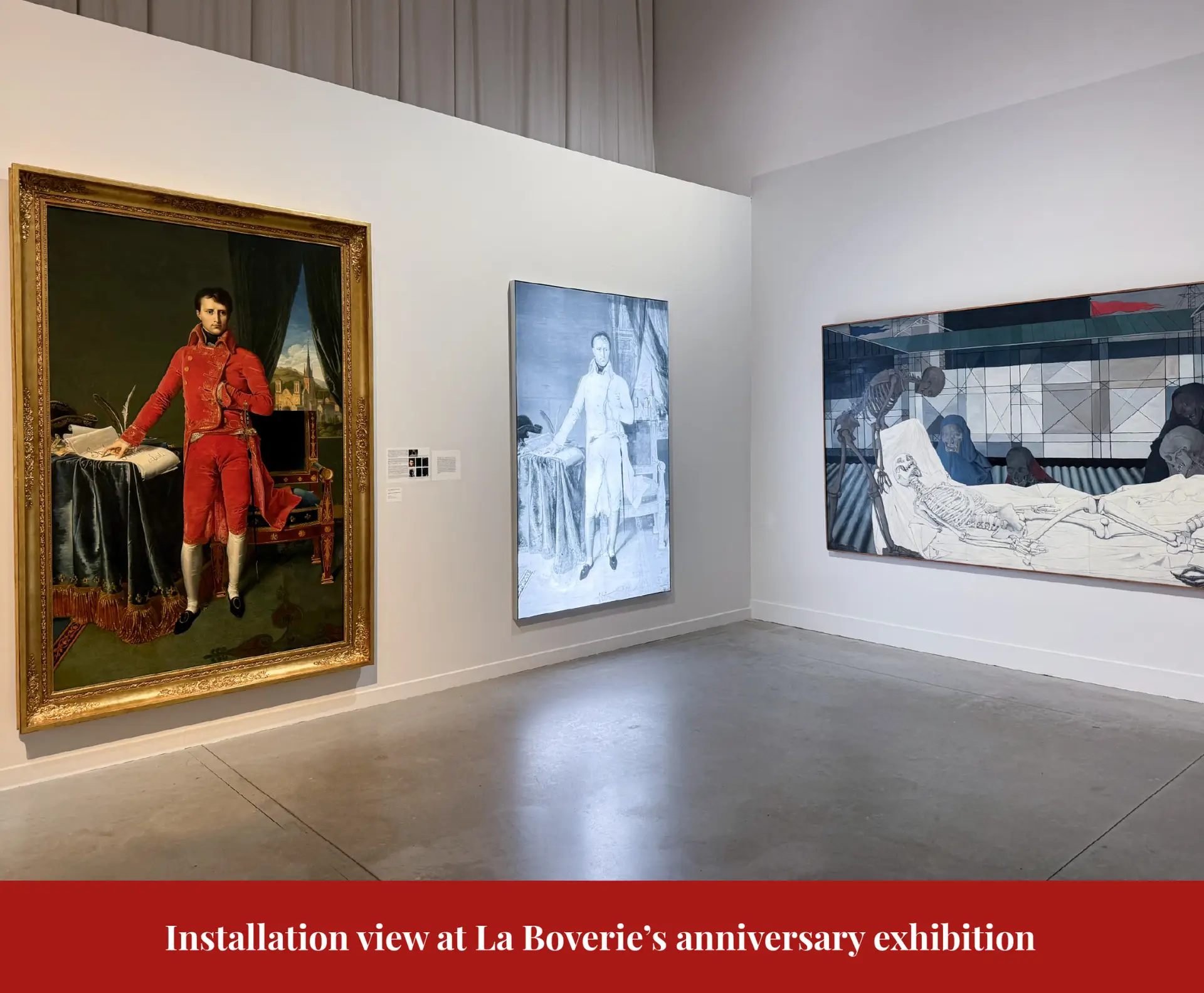
It is a big thing, almost absurdly so, and therefore entirely Napoleonic. Bonaparte is shown full-length, life-size, wrapped in very fetching red, one hand tucked into his waistcoat, the other resting on the document promising the reconstruction of Amercœur, the Liège suburb devastated during the wars of the 1790s. Behind him, through a window, appears the cathedral of Saint-Lambert, although by 1804 the cathedral was no longer standing. It had been destroyed after Liège’s Happy Revolution.
In August 1789, almost in step with Paris, the city rose against its prince-bishop, César-Constantin de Hoensbroeck, in what local memory rather optimistically called the Heureuse Révolution, the Happy Revolution. It was “happy” in the eighteenth-century sense, meaning fortunate or auspicious, not in the sense that people were having an unreasonable amount of fun rebelling. The movement forced the prince-bishop to flee, briefly opened the way to republican and constitutional experiments, and was crushed by imperial intervention in 1791. Yet the old ecclesiastical principality never quite recovered and kept changing hands between the Austrians and the French, depending on who was winning the French Revolutionary War at the time. The cathedral of Saint-Lambert had begun to be destroyed in 1794, when the city was in French hands.
Liège had been absorbed into revolutionary France in 1795 as part of the département de l’Ourthe. Bonaparte visited the city in August 1803, and the reconstruction of Amercœur became a useful scene of governmental benevolence. The suburb had been destroyed by Austrian troops during their retreat in 1794, and Napoleon’s 1803 decree made 300,000 francs available for reconstruction. The words on the paper in Ingres’s painting, Faubourg d’Amercœur rebâti, refer directly to that decree.
Bonaparte does not appear as the young general of Arcole, hair flying, sword drawn, soldiers following behind him with suicidal enthusiasm. He appears as a statesman. A lawgiver. A man who signs decrees, repairs suburbs, and reconciles churches. The sword is still there, of course. The sword is always there. But it is not the star of the performance. The document is.
Which makes sense. This painting was a gift in 1805 from Bonaparte himself to the city of Liège. It was a work for the citizens of Liège, for their eyes. The message was for them.
The cathedral in the background is even more eloquent. Saint-Lambert appears whole, but conveniently as a background piece. This is a symbolic nod to the Concordat of 1801, the agreement between Bonaparte and Pope Pius VII which restored public Catholic worship in France while keeping the Church firmly under state supervision. The Catholic religion was recognised as that of the great majority of French citizens, but the settlement gave the state enormous leverage over bishops, salaries, and ecclesiastical administration.
The message of the painting is clear. It does not say, “I have conquered Liège.” That would be vulgar. It says, “I have repaired Liège.” It does not say, “The Church submits.” That would be crude. It shows the cathedral framed by curtains, subordinated by scale, and made decorative. It does not say, “I am becoming a monarch.” It places Bonaparte in a red costume, beside a throne-like chair, with an ornamental sword, and lets the viewer draw their own conclusions.
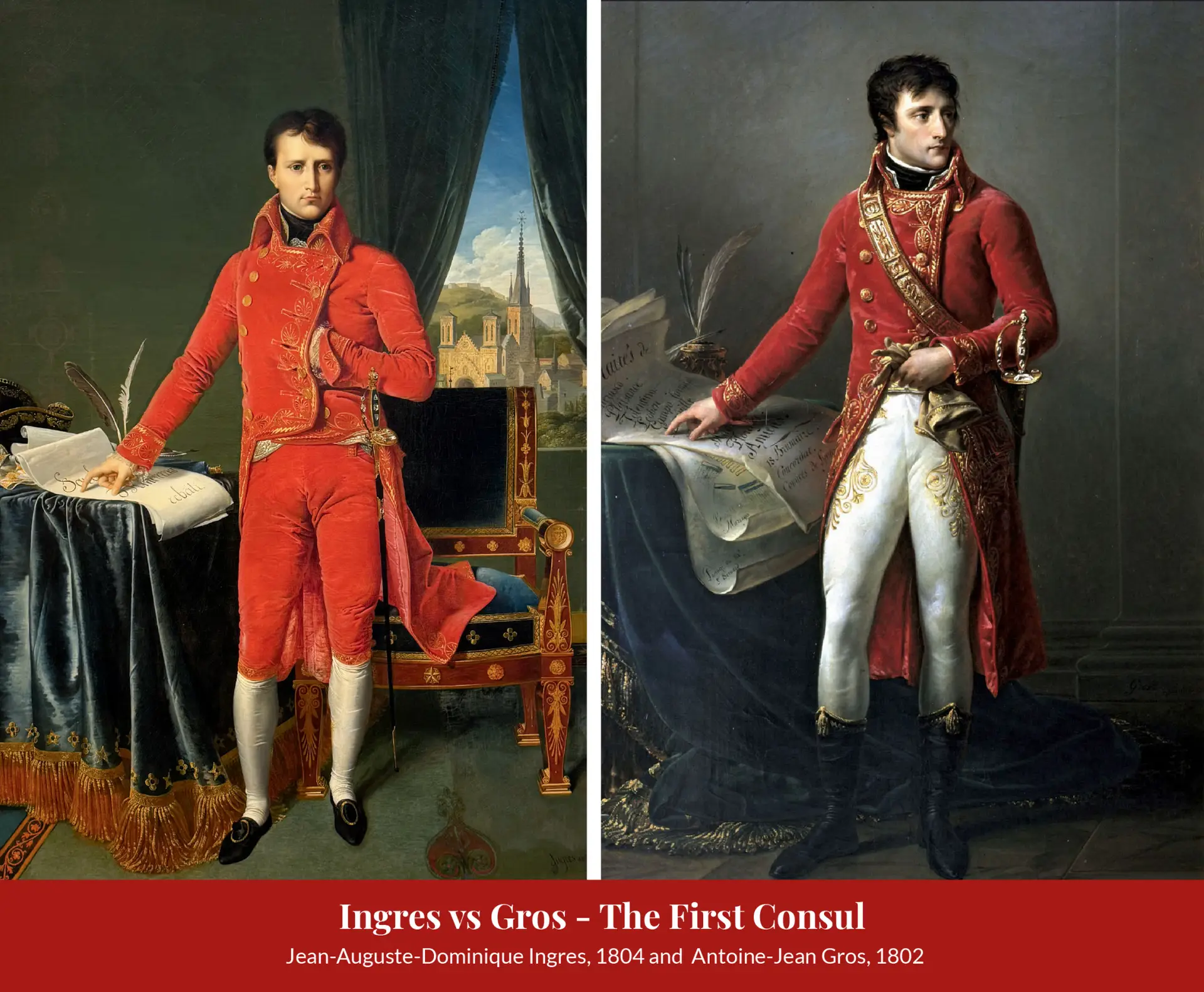
Ingres was only twenty-three when he painted this. He had trained within the academic tradition and under the long shadow of Jacques-Louis David. Bonaparte did not sit for Ingres. The young painter relied on an earlier 1802 portrait by Antoine-Jean Gros. Gros’s Bonaparte, First Consul had already presented the general transformed into chief of state. Ingres takes some of those elements and reuses them in his own version, but gives Bonaparte a more stately, less lively look. To me, Ingres’s Bonaparte looks like he could use a few cups of coffee.
The scientific display beside the painting is one of the best parts of the exhibition. Infrared reflectography reveals the underdrawing, the decisions, the hesitations, and the second thoughts of the artist. Bonaparte was moved closer to the centre of the composition; the costume, especially the collar, was adjusted; the carpet once had star motifs; the window originally had no curtain.
As someone who dabbles in painting, I actually enjoyed reading the pigment analysis. The exhibition lists lead white, Naples yellow, chrome yellow, carbon black, Prussian blue, vermilion, and earth pigments based on iron and manganese oxides. It is a very rich palette that skews rather warm, which I presume was a conscious choice to make Bonaparte appear more approachable.
Personally, I am not a big fan of his expression. To me he looks a bit dead, and I think Ingres’s later paintings, including the one of Napoleon on his imperial throne, do a better job of conveying emotion in the face. But the details of the waistcoat, the room, and the background are gorgeous. I spent a good five minutes admiring the waistcoat and the throne before the little gremlin screamed “mama bunny” to show me another painting with a dead bunny (the joys of parenting…).
The painting now belongs to La Boverie’s collection and has been classified as a Trésor of the Fédération Wallonie-Bruxelles since 2012. I think it is part of the regular collection, so it is worth a visit. Plus, the rest of the collection is quite good as well and very diverse: local artists, some Picasso, some Gauguin, some nice Impressionist work.